
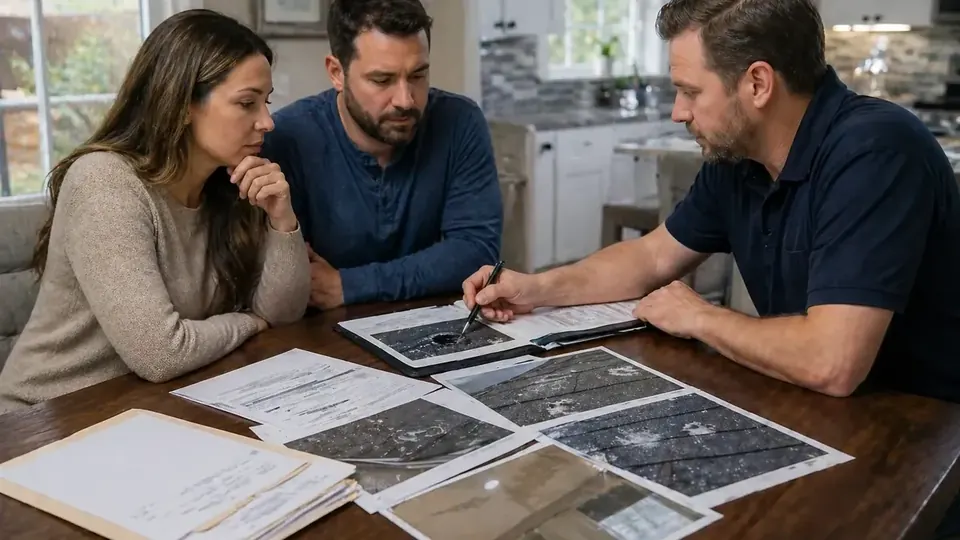
These are the questions Port Arthur Public Adjuster hears most often from homeowners, landlords, and business owners in Port Arthur, Jefferson County, and the rest of the Golden Triangle. They cover how public adjusters work and what they cost, TWIA windstorm and flood claims, hurricane deductibles, claim timelines, appraisal, denied and underpaid claims, mold, commercial losses, and what to do after a storm.
The answers are general information, not legal advice, and coverage always depends on your policy and the facts of your loss. If your question is about your own claim, request a Free Claim Review or browse our claim services.
Frequently Asked Questions
What is a public adjuster?
A public adjuster is a licensed insurance professional who represents the policyholder, not the insurance company, on a property insurance claim. In Texas, public adjusters are licensed and regulated by the Texas Department of Insurance under Insurance Code Chapter 4102. They inspect and document damage, review the policy, prepare an estimate, and communicate and negotiate with the insurer.
How is a public adjuster different from the insurance company's adjuster?
The company adjuster, whether staff or independent, is hired by the insurer (or TWIA) and evaluates the claim under the insurer's guidelines. A public adjuster works for you under a written contract that must state "We represent the insured only." Read are insurance adjusters honest? for a balanced look.
Is a public adjuster the same as an attorney?
No. Public adjusters do not give legal advice, file lawsuits, or represent anyone in court. For questions about suits, bad faith, or legal deadlines, consult a Texas attorney.
Do I need a public adjuster for every claim?
No. Small, straightforward claims are often resolved fairly without outside help. A public adjuster tends to be most useful when the loss is large or complex, several policies are involved, the claim is disputed, or the insurer's estimate does not match the real repair scope. See public adjuster pros and cons.
How much does a public adjuster cost in Texas?
Fees are disclosed in a written contract before any work begins; Texas law caps public adjuster compensation at 10% of the insurance settlement. If the insurer pays or commits in writing to pay policy limits within 72 hours after the loss is reported, a percentage fee is not allowed. Our Free Claim Review costs nothing and carries no obligation.
Can I cancel a public adjuster contract?
Yes. Texas public adjuster contracts must use TDI-approved terms and allow you to rescind within 72 hours of signing. The contract explains how.
What is TWIA and why do so many Port Arthur owners have it?
The Texas Windstorm Insurance Association (TWIA) is the insurer of last resort for wind and hail in designated coastal areas. Jefferson County is a first-tier coastal county in that area, so many Port Arthur homeowners carry a homeowners policy that excludes wind and hail plus a separate TWIA policy. Orange County is not in the TWIA area. See TWIA windstorm claims.
What are the deadlines on a TWIA claim?
According to TWIA, policyholders have one year from the date the property was damaged to report a claim, TWIA generally has 60 days to accept or reject it, and it has 10 days to pay after accepting coverage. Appraisal requests on the actual cash value amount generally must be made within 60 days of the notice letter. Litigation against TWIA has special notice rules, so talk to a Texas attorney about disputes over coverage. Read our TWIA windstorm claim guide.
What is a WPI-8 and do I need one after roof repairs?
A WPI-8 is TDI's Certificate of Compliance for windstorm construction in the TWIA catastrophe area. Repairs, including re-roofs and roof repairs, generally must be inspected and certified to stay eligible for TWIA coverage. See our Port Arthur building codes page.
Does my homeowners or TWIA policy cover flood?
Generally no. Standard homeowners, commercial, and TWIA policies exclude flood, including storm surge and rising water. Flood coverage comes from the National Flood Insurance Program or a private flood policy (floodsmart.gov). NFIP policies usually have a 30-day waiting period before coverage begins.
My home had both wind and flood damage. How is that handled?
Usually as separate claims: wind with TWIA or your homeowners insurer and rising water with your flood insurer, each with its own adjuster and deductible. Clear documentation of what each cause damaged, such as high-water lines and roof openings, matters a great deal. Read wind vs. flood damage in Port Arthur.
How does a hurricane or named-storm deductible work?
Many Texas policies set a separate wind/hail or named-storm deductible as a percentage of the dwelling (Coverage A) limit, often 1%, 2%, or 5%. On a $200,000 dwelling limit, a 2% deductible is $4,000. Each policy involved in a storm may apply its own deductible. Check your declarations page, try the hurricane deductible calculator, and read hurricane deductibles in Texas explained.
How long does an insurance company have to handle my claim in Texas?
Under the Texas Prompt Payment of Claims statute, insurers generally must acknowledge the claim, begin investigating, and request information within 15 days of notice; accept or reject within 15 business days after receiving everything requested (or explain why more time is needed, up to 45 more days); and pay within 5 business days after accepting. These deadlines can be extended by 15 days after a weather-related catastrophe. TWIA and surplus lines insurers follow different rules.
Is there a deadline to sue my insurer?
Many policies set a contractual deadline to sue, often two years and one day after the loss, and weather-related lawsuits require written notice at least 61 days before filing. Check your policy and consult a Texas attorney; a public adjuster cannot advise you on lawsuits.
What is the appraisal process?
Many property policies include an appraisal clause for disputes over the amount of loss, not coverage. Each side picks an appraiser, the appraisers pick an umpire, and an award agreed to by any two is generally binding on the amount. Policy language controls. See insurance appraisal.
My claim was denied. What should I do?
Ask for the denial in writing, read the exact policy language cited, and compare it with your photos and the facts. Many denials rest on cause-of-loss findings, such as "wear and tear" or "flood, not wind," that can be reviewed with better documentation. See denied insurance claims and denied insurance claim in Port Arthur.
How do I know if my claim was underpaid?
Compare the insurer's estimate line by line with what the repairs actually require. Missing items, low quantities, excessive depreciation, and leaving out code-required or windstorm-required work are common reasons a payment falls short. See underpaid insurance claims.
Can a closed claim be reopened?
Often, depending on the policy and timing. When additional damage is found or the original scope was incomplete, a supplemental claim may be possible. Do not wait: policy and statutory deadlines still apply. See when is it too late to hire a public adjuster.
Is mold covered after water damage?
It depends on the policy. Many policies exclude mold or limit it with a sublimit, but some cover mold that results from a covered water loss. In Southeast Texas humidity, mold can begin quickly, so dry the property promptly and document everything. See mold damage claims.
Do you handle commercial property claims?
Yes. We work on claims for retail, office, industrial, multifamily, and mixed-use properties, including metal buildings and low-slope roofs common in the Port Arthur area. Commercial claims often include business income questions when operations stop after a storm. See commercial property claims.
What should I do right after a hurricane or major storm?
Stay safe and follow emergency instructions. Then photograph and video all damage before cleanup, take reasonable steps to prevent further damage (tarping, water extraction, drying), keep receipts, and report the loss to each insurer involved. Our documentation checklist and storm documentation guide walk through the details.
Should I make repairs before the adjuster comes?
Make temporary repairs needed to prevent further damage, and keep receipts and photos. Hold off on permanent repairs until the damage has been documented and you have discussed it with your insurer, unless waiting would be unsafe. Remember that roof repairs in Jefferson County may need TDI windstorm inspection.
What areas do you serve?
We serve Port Arthur, Jefferson County, and surrounding Southeast Texas communities, including Beaumont, Nederland, Groves, Port Neches, Sabine Pass, and Orange.