Key takeaways
- Read the denial letter for the exact reason and the policy provision cited. Your response should target that reason.
- Common Gulf Coast denial reasons include wear and tear, flood exclusion, late notice, pre-existing damage, and mold limits.
- Ask for the adjuster's estimate, photos, and any engineering report the insurer relied on.
- Appraisal resolves disputes over the amount of a loss, not whether it is covered.
- You can file a complaint with the Texas Department of Insurance. Coverage litigation and suit deadlines are questions for a Texas attorney.
A denied insurance claim in Port Arthur often arrives at the worst possible time: after a hurricane, while the roof is tarped and the drywall is already cut out. The letter may cite policy language that reads like a foreign language. It is easy to assume the decision is final. Often, it is not the last word.
This guide explains how to read a denial letter, the most common reasons claims are denied along the upper Texas coast, practical steps to respond, how a TDI complaint works, when appraisal fits, and when to talk to an attorney. It is general information, not legal advice. Your policy and the facts of your loss control the outcome.
Step 1: Read the denial letter carefully
A denial letter should tell you what the insurer decided and why. Read it slowly, ideally with your policy open beside it, and pull out these pieces:
- Full or partial denial. Many hurricane claims are partly paid and partly denied. Know exactly which items were rejected.
- The stated reason. Wear and tear? Flood? Late notice? No storm-created opening?
- The policy provision. Most letters quote or cite an exclusion, condition, or limitation by section. Find it in your policy and read the full section, including any exceptions.
- The evidence relied on. An adjuster inspection, an engineer's report, weather data, photos?
- Any deadline or next step the letter mentions.

If the letter is vague, write back and ask for the specific policy provisions and the factual basis for the decision. Under Texas prompt payment rules in Insurance Code Chapter 542, an insurer that rejects a claim must notify the claimant in writing of the reasons. A clear written reason makes it much easier to respond.
Common denial reasons on the Gulf Coast
Certain reasons come up again and again on Southeast Texas property claims. Here is what each usually means and the evidence that may help answer it.
| Denial reason | What the insurer is saying | Evidence that may help |
|---|---|---|
| Wear and tear / deterioration | Damage is from age or lack of maintenance, not the storm | Pre-storm photos, roof age records, storm-date weather data, signs of fresh damage (creases, torn mats, missing tabs) |
| Flood / surface water exclusion | Water rose from outside, which the policy excludes | Damage above the water line, roof and window openings, timeline, moisture maps |
| No storm-created opening | Rain got in without wind first creating an opening | Photos of missing shingles, lifted flashing, broken windows tied to the date |
| Late notice | You reported too long after the loss, hurting the investigation | When you discovered the damage, why it was hidden, prompt action once found |
| Pre-existing damage / prior claim | Damage existed before this storm or was already paid | Prior repair invoices, photos after earlier repairs, inspection reports |
| Mold limitation or exclusion | Mold is excluded or capped at a low sublimit | Evidence mold resulted from a covered water loss; mitigation timeline |
| Continuous or repeated leakage | Water leaked over weeks or months | Plumber report on the failure, date of discovery, sudden-failure evidence |
| Below deductible | The estimate does not exceed the deductible | A detailed independent estimate showing missed scope |
Wear and tear on older roofs
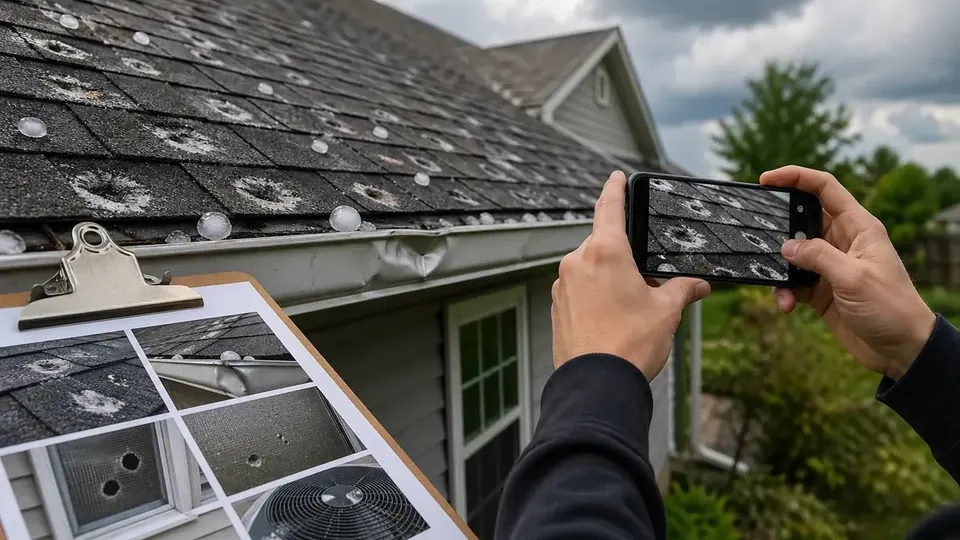
Many Port Arthur neighborhoods have older housing stock and composition shingle roofs that have weathered years of Gulf heat and UV. Insurers often point to granule loss, curling, or old repairs and call the damage "wear and tear." The key question is whether the storm caused new, distinct damage on top of the age. Fresh creases, torn shingles, missing tabs with clean edges, and impact marks from hail are different from gradual aging. Our roof damage insurance claims page covers what adjusters look for.
The flood exclusion after hurricanes
After a hurricane or a rain event like Harvey or Imelda, homeowners and TWIA policies often deny interior damage as flood. Sometimes that is correct; rising water is excluded and belongs to a flood policy. Sometimes wind or wind-driven rain caused part of the damage. Separating the two with evidence is the core of these disputes. See wind vs. flood damage in Port Arthur.
Late notice
Policies require prompt notice. TWIA says the deadline to report a claim is one year from the date of damage, with a possible extension for good cause. Other policies use phrases like "prompt notice" without a fixed number of days. A denial for late notice may be harder to answer, but the facts matter: when the damage was discovered, whether it was hidden, and whether the delay actually hurt the insurer's ability to investigate. These are often legal questions for an attorney.
Mold limits
Southeast Texas humidity means mold can follow a water loss within days. Many policies exclude mold or cap it at a sublimit, but may cover mold that results from a covered water loss up to that limit. Read the mold provisions closely. Our mold damage claims page explains how those claims are usually handled.
Step 2: Gather the insurer's file and your own evidence
Before responding, get the full picture:
- Request the insurer's documents. Ask in writing for the adjuster's estimate, inspection photos, any engineer or expert report, and the complete policy with all endorsements.
- Organize your own evidence. Photos and video, mitigation reports and moisture logs, receipts, prior repair records, and your communication log. Our guide on how to document storm damage covers what to collect.
- Pull weather records. NOAA and NWS records for your date of loss can support that damaging wind, hail, or flooding occurred at your location. Our storm lookup tool is a starting point.
- Get an independent opinion where useful. A roofer's report, plumber's report, or engineer's opinion can address the specific reason for denial.
Step 3: Respond in writing
A strong response is specific, organized, and tied to the denial reason. It typically includes:
- Your claim number, policy number, and date of loss.
- The reason given for denial, quoted from the letter.
- Why you believe the reason does not apply, point by point.
- The evidence that supports your position, labeled and attached.
- A request for reconsideration and, if helpful, a reinspection with you or your representative present.
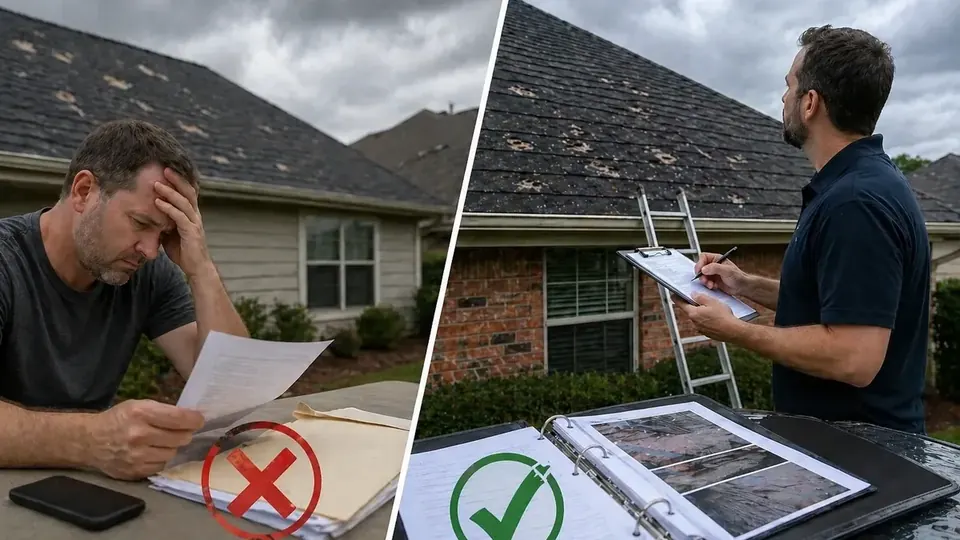
Keep copies of everything you send and note the date. Stay factual and professional. Insurers often respond better to a well-documented file than to frustration, and the record may matter later.
Step 4: Consider a TDI complaint
The Texas Department of Insurance helps consumers with complaints against insurance companies, agents, and adjusters. You can file online at TDI's website, choosing the type of insurance (including Homeowners, TWIA, and Flood), or call the TDI Help Line at 800-252-3439, 8 a.m. to 5 p.m. Central time, Monday through Friday.
A complaint typically prompts the insurer to respond to TDI about your claim. It can be a useful step when communication has broken down or deadlines are not being met. It is not a substitute for a coverage decision by a court, and it does not guarantee payment. Include your claim number, a short timeline, and copies of key documents.
Step 5: Appraisal vs. coverage disputes
This distinction trips up many policyholders.
| Amount-of-loss dispute | Coverage dispute | |
|---|---|---|
| Example | Insurer agrees the roof was damaged by wind but pays for repairs, not replacement | Insurer says the damage is wear and tear or flood, so nothing is owed |
| Typical path | Negotiation, supplements, appraisal | Reconsideration, TDI complaint, attorney |
| Who decides | Two appraisers and, if needed, an umpire (under the policy's appraisal clause) | Ultimately a court, if not resolved |
Under a typical appraisal clause, either side can demand appraisal when you disagree about the amount of loss. Each side picks an appraiser, the appraisers pick an umpire, and an award agreed by two of the three is generally binding on the amount. Appraisal usually does not decide whether the loss is covered. If your claim was denied outright as excluded, appraisal is often not the right tool. If coverage was accepted but the payment is low, it may be. Policy language controls. Learn more on our insurance appraisal page.

When to call a Texas attorney
Public adjusters are not attorneys. Talk to a Texas attorney who handles insurance disputes when:
- The denial is based on a coverage exclusion you believe does not apply, and reconsideration has failed.
- You are close to a contractual deadline to sue. Many policies use two years and one day; check your policy.
- The insurer relies on late notice, misrepresentation, or fraud allegations.
- You believe the insurer acted in bad faith or violated the prompt payment statute.
- The claim involves TWIA, which has special dispute and litigation rules.
- You are considering a lawsuit on a weather-related claim, where Texas law requires written pre-suit notice under Chapter 542A.
Do not wait until the last minute. Deadlines can be strict, and an attorney needs time to review the file.
How a Port Arthur Public Adjuster can help after a denial
A licensed public adjuster represents the policyholder in the claim process. After a denial, that can mean reviewing the policy and denial letter, re-inspecting and documenting the property, pulling weather data, preparing a detailed estimate, and presenting a supported request for reconsideration. When the dispute is about amount, a public adjuster may also help with supplements or appraisal. When it becomes a legal dispute, we recommend involving a Texas attorney.
Fees are disclosed in a written contract before any work begins; Texas law caps public adjuster compensation at 10% of the insurance settlement, and Texas contracts can be rescinded within 72 hours of signing. No public adjuster can guarantee that a denial will be reversed. A Port Arthur Public Adjuster review can help you understand whether the denial reason fits the facts. Start with our denied insurance claims page or request a free claim review. If your claim was paid but the amount seems low, see underpaid insurance claims.
Frequently Asked Questions
Can I dispute a denied insurance claim in Texas?
Yes. You can ask the insurer to reconsider with new evidence, request the documents it relied on, ask for a reinspection, file a complaint with the Texas Department of Insurance, and, for disputes over the amount of a covered loss, use the appraisal clause if your policy has one. Coverage disputes and lawsuits are legal matters for a Texas attorney.
How long do I have to respond to a denial?
It depends on your policy and the type of claim. Many policies set a contractual deadline to file suit, often two years and one day from the date the claim accrues, and TWIA claims have their own rules. Check your policy and talk to a Texas attorney about any deadline as soon as possible.
Is appraisal a way to overturn a denial?
Generally no. Appraisal resolves disagreements over the amount of a loss, not whether the loss is covered. If the insurer denied the claim as excluded, appraisal usually is not the right tool. If the insurer accepted coverage but paid too little, appraisal may be an option under your policy.
Does filing a TDI complaint force the insurer to pay?
No. TDI can help with complaints against insurers, agents, and adjusters, and it will typically ask the insurer to respond. A complaint can prompt another look at the claim, but it does not decide coverage the way a court would.
Can a public adjuster help with a denied claim?
A licensed public adjuster can review the policy and denial, document the damage, and present additional evidence and an estimate to the insurer. A public adjuster cannot give legal advice or file a lawsuit. For bad faith, suit deadlines, or coverage litigation, consult a Texas attorney.
What if my claim was partially denied?
Partial denials are common, especially on hurricane claims where some damage is attributed to flood or wear and tear. Review which items were denied and why, and respond to each reason with evidence. The accepted portion may also be underpaid, which is a separate issue.
Sources and further reading
This article is general information about property insurance claims in Texas, not legal advice, and not a promise of any coverage or outcome. Your policy language and the facts of your loss control your claim.