
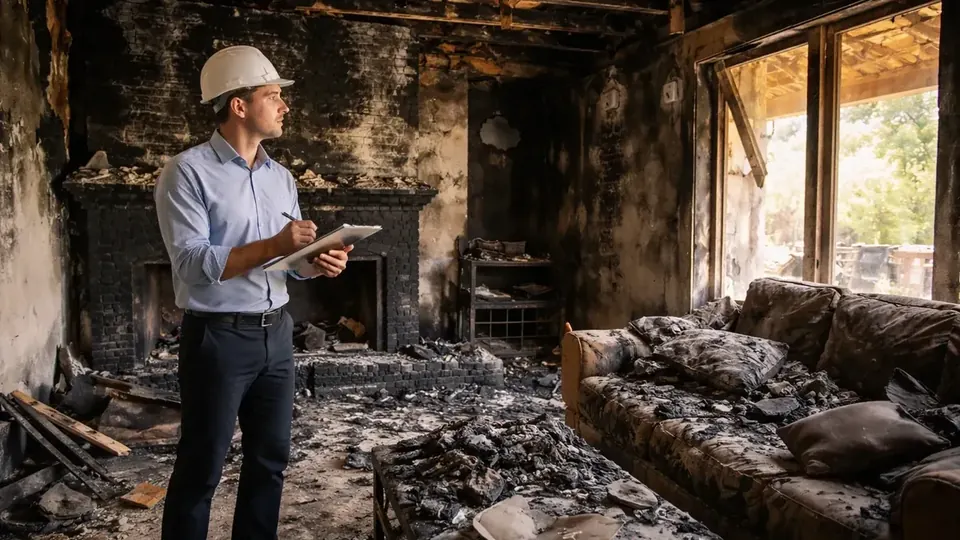
Smoke is one of the most underestimated parts of any fire loss. A grease fire in a kitchen, an electrical fire in an attic or a fire in the duplex next door can leave fine soot on every surface, odor in the drywall and insulation, and residue inside the air conditioning system. A smoke damage insurance claim in Port Arthur often turns on whether the estimate accounts for all of that, or only for the scorched area you can point to. We help homeowners, landlords and business owners in Port Arthur, Jefferson County and nearby Golden Triangle communities document smoke losses thoroughly and present them to the insurer.
If the fire itself caused structural damage, our fire damage claims page covers the larger loss. This page focuses on the smoke, soot and odor that tend to get overlooked.
Why Smoke Damage Is Hard to Get Right
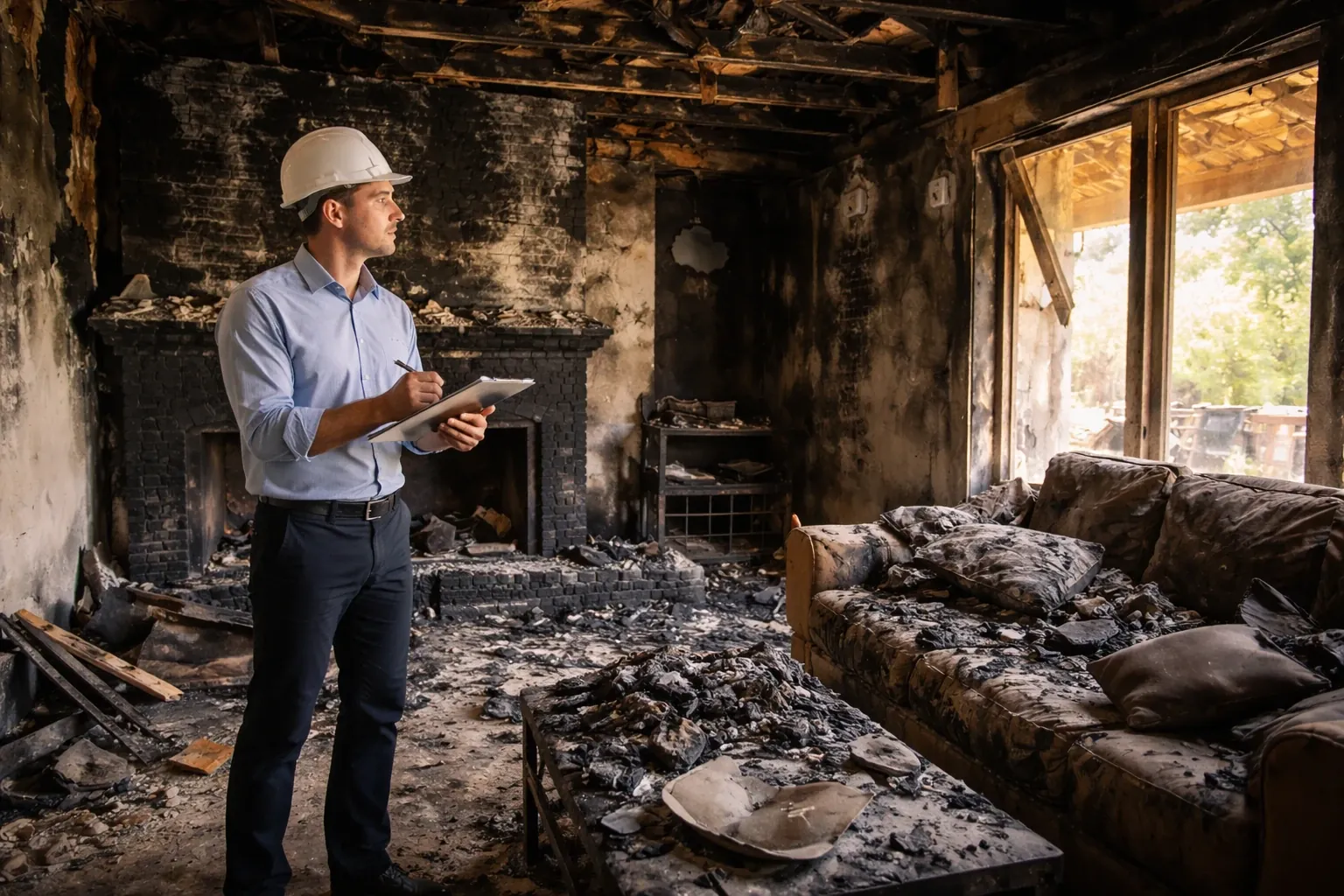
Smoke particles are small enough to move through gaps around outlets, light fixtures, attic hatches and wall cavities. They settle on cooler surfaces, so exterior walls, window frames and the inside of closets can show residue that the main living area does not. The type of material burned matters too. Burning plastics, foam furniture and synthetic carpet produce oily residue that smears when wiped and can be harder to remove than ash from wood.
Southeast Texas heat and humidity add another layer. Odor that seems faint on a cool day may become noticeable once the house is closed up and the air conditioning cycles through a summer afternoon. That is one reason an odor complaint weeks after cleaning is not unusual, and why it should be documented when it happens.
Types of Smoke Residue and What They Usually Affect
| Residue type | Common source | Typical concerns in the claim |
|---|---|---|
| Dry, powdery soot | Fast, hot fires burning wood or paper | Spreads widely; may clean from hard surfaces but lodges in textured ceilings and fabrics |
| Wet, oily soot | Slow, smoldering fires burning plastics, foam or synthetics | Smears when wiped; often stains paint and cabinetry; strong odor |
| Protein residue | Kitchen fires involving food or grease | Nearly invisible film with heavy odor; can discolor paint and finishes |
| Fuel or furnace residue | Equipment malfunction or a fire in an attached space | Dark, sticky residue; may affect ductwork and contents throughout |
The table is a general guide. The cleaning method, the materials affected and the policy language all shape what the insurer should include.
What a Complete Smoke Damage Claim Looks At
The building
- Walls and ceilings in every affected room, not just the room of origin
- Cabinet interiors, closets, attic framing and insulation
- Windows, blinds, light fixtures and ceiling fans
- Whether surfaces need cleaning only, cleaning plus odor-sealing primer and paint, or replacement
The HVAC system
Return air grilles, filters, the evaporator coil and ductwork can carry residue into every room. Flex duct common in Port Arthur attics can be difficult to clean, and replacement is sometimes the practical answer. Ask that the system be inspected rather than assumed clean.
Contents
Clothing, bedding, upholstered furniture, rugs, electronics and kitchen items may all be affected. Some can be professionally cleaned; others cannot be restored. A room-by-room inventory with photos is the backbone of the contents portion of the claim. Our claim documentation checklist walks through what to capture.
Living expenses and business income
If the home is not livable during cleaning, additional living expense coverage may apply. For a business, smoke that forces a closure can raise business interruption questions under a commercial policy.
Common Disputes in Port Arthur Smoke Claims
Most smoke disagreements are not about whether there was a fire. They are about scope. These are the issues we see raised most often:
- Clean versus replace. An estimate may call for wiping walls when residue has penetrated porous drywall texture or odor persists after a test cleaning.
- Limited room count. The estimate may include the kitchen and adjoining rooms while ignoring bedrooms down the hall where soot is plainly visible on window sills.
- HVAC left out. Duct cleaning or coil replacement is missing entirely.
- Contents depreciation. Replacement-cost contents may be paid at depreciated value first, with the remainder held until items are replaced, depending on the policy.
- Odor returning after cleaning. Persistent odor can be evidence that the first round of work did not fully address the loss.
When the gap is mostly about pricing or line items, an insurance estimate review can show exactly what is missing. If the insurer has already paid and more damage surfaces, a claim supplement may be the next step.
When the Fire Was Somewhere Else
Some of the smoke claims that cause the most confusion involve a fire that never touched the policyholder’s property. A fire in the other half of a duplex, in a neighboring townhome or in a nearby commercial building can push smoke through shared attics, wall cavities and open windows. The damage is real, but the insurer may be skeptical because nothing burned. In those cases, documentation is especially important: the date and address of the fire, any fire department report, photos showing residue on your surfaces and a clear explanation of how the smoke got in. Many policies cover this kind of loss as sudden and accidental smoke damage, subject to their specific exclusions.
Steps to Take After Smoke Damage
- Make sure the property is safe to enter and the fire department has cleared it.
- Report the claim promptly and write down the claim number and adjuster’s name.
- Photograph every room before anything is cleaned, including close-ups of residue on light-colored surfaces.
- Avoid running the HVAC system until it has been inspected, if you can do so safely.
- Keep damaged contents until the insurer has seen them or agrees in writing they can go.
- Save receipts for hotel stays, meals and emergency services.
How a Port Arthur Public Adjuster Can Help With Smoke Claims
As a Port Arthur Public Adjuster serving homeowners and businesses across Jefferson County, we inspect the property room by room, document residue and odor, review the HVAC system and contents, and prepare a line-item estimate in Xactimate to present to the insurer. We read the policy for smoke, contents and living expense coverage and explain what applies. We cannot promise a particular result, but a well-documented smoke claim gives the insurer far less room to treat the loss as a quick wipe-down.
Fees are disclosed in a written contract before any work begins; Texas law caps public adjuster compensation at 10% of the insurance settlement. If you would like a second set of eyes on a smoke estimate, start with a Free Claim Review or call +1 (832) 503-5866.
Frequently Asked Questions
Is smoke damage covered if there was no fire in my home?
Many homeowners and commercial policies cover sudden and accidental smoke damage even when the fire was next door, in an attached unit, or in a nearby building. Some policies exclude smoke from certain sources, such as agricultural or industrial operations, so read the smoke peril and exclusions in your own policy.
The insurer wants to clean my walls. Do I have to accept that?
Cleaning is often the right answer for light residue. When soot has bonded to porous materials, odor returns after cleaning, or staining bleeds through primer, replacement or sealing may be needed. The question is what it actually takes to restore the item, and that is a fact question you can document and discuss with the insurer.
Should my HVAC system be inspected after a small fire?
Usually, yes. A running system can pull smoke into the return, coil and ductwork and spread residue to rooms the fire never reached. Ask for the system to be inspected and, where residue is found, for cleaning or replacement to be included in the estimate.
How do I claim smoke-damaged clothing, furniture and electronics?
Make a room-by-room inventory with photos, descriptions, approximate age and replacement cost. Keep damaged items until the insurer has had a chance to see them or tells you in writing they can be discarded. Items that can be cleaned may be sent to a contents cleaner; items that cannot are usually listed for replacement under the policy terms.
Can I stay somewhere else while the house is cleaned?
If smoke makes the home unfit to live in, many homeowners policies provide additional living expense or loss-of-use coverage. Keep receipts for lodging, meals above your normal costs and other extra expenses, and confirm the limits on your declarations page.
How much does a public adjuster charge for a smoke claim?
Fees are disclosed in a written contract before any work begins; Texas law caps public adjuster compensation at 10% of the insurance settlement. You can rescind a Texas public adjuster contract within 72 hours of signing.