
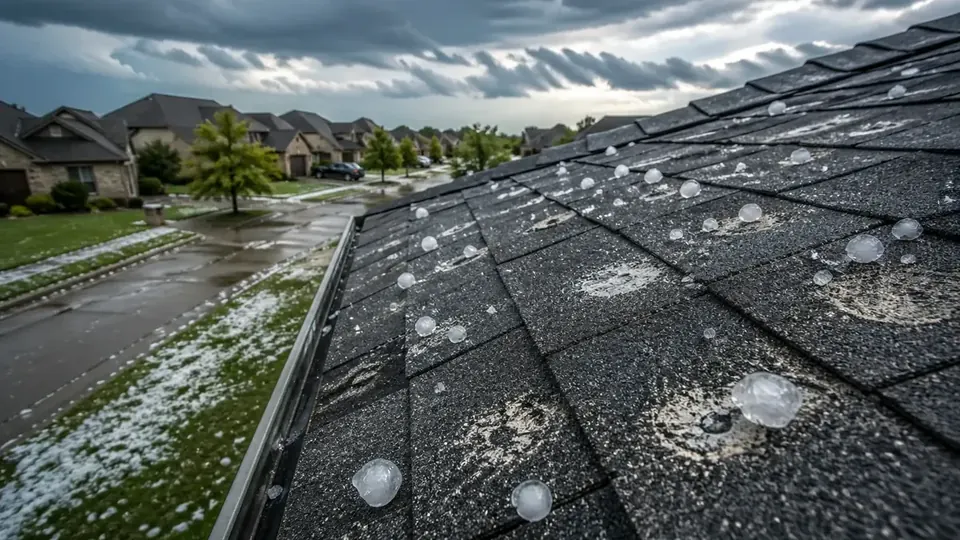
Port Arthur storm damage claims come from more than hurricanes. A spring squall line can drop hail on Groves, knock a pecan limb through a roof in Port Arthur, and leave a business on Highway 69 without power for two days. A December cold front can spin up a tornado. Each of these is a storm claim, and each can involve several different coverages inside the same policy. This page focuses on how storm claims move from the first phone call to payment, and how to keep them from stalling.
The Storms That Damage Port Arthur Properties
NOAA’s Storm Events Database records a steady mix of severe weather in Jefferson County. A few recent examples:
- Beryl, July 2024. NOAA recorded tropical storm conditions in lower Jefferson County, with a peak gust of 70 mph at Sabine Pass, and surge covered much of Highway 87 from Sabine Pass to Sea Rim State Park (NCEI event record).
- Tornadoes. An EF-2 tornado tracked through parts of Port Arthur on April 10, 2024, and an EF-3 crossed into Jefferson County near Hamshire on December 28, 2024 (NCEI event record).
- Hurricane Delta, October 2020. Hurricane-force winds reached Sabine Pass, and 5 to 6.5 inches of rain fell across the county (NCEI event record).
- February 2021 winter storm. A prolonged statewide freeze burst pipes in homes and businesses that were never built for that kind of cold.
You can search past events near your address with our storm lookup tool or browse recent weather events.
One Storm, Several Coverages
A single storm can touch several parts of your policy at once. Knowing which part applies helps you read the insurer’s estimate.
| Storm damage | Coverage that may apply | Watch for |
|---|---|---|
| Roof, siding, windows | Dwelling (Coverage A), wind/hail coverage or TWIA | Percentage wind/hail deductible |
| Detached garage, fence, shed | Other structures (Coverage B) | Separate, lower limit |
| Furniture, electronics, clothing | Personal property (Coverage C) | ACV vs. replacement cost terms |
| Hotel and meals while repairs are made | Additional living expense (Coverage D) | Time and dollar limits |
| Tree removal | Debris removal / trees provision | Small per-tree and per-loss caps |
| Spoiled food after outage | Food spoilage provision, if any | Often requires damage at the premises |
| Lost income for a business | Business income coverage | Waiting period, physical damage trigger |
Commercial owners should also review civil authority and utility service interruption terms. Our commercial property claims page covers those in more detail.
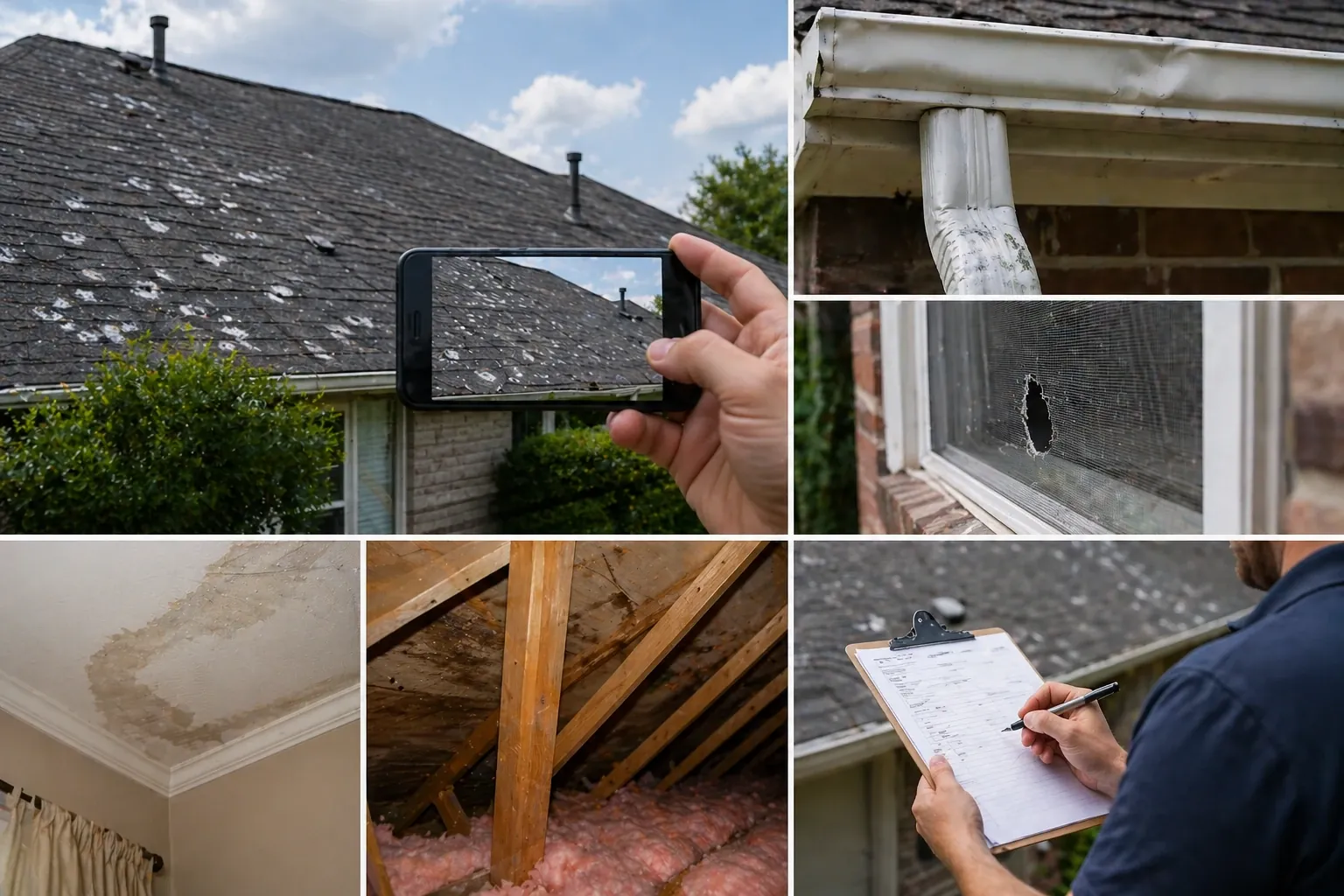
The Claim Timeline After a Storm
For many insurers, Texas Insurance Code Chapter 542 sets the general pace of a claim:
- Within 15 days of notice, the insurer generally must acknowledge the claim, begin its investigation, and request the information it needs.
- Within 15 business days after receiving everything it asked for, it generally must accept or reject the claim, or explain why it needs more time (up to 45 more days).
- Within 5 business days after accepting, it generally must pay.
After a weather-related catastrophe declared by the commissioner, these deadlines can be extended by 15 days. TWIA claims follow Chapter 2210 instead (see our TWIA windstorm claims page), and surplus lines carriers differ. If your claim has gone quiet past these windows, our delayed insurance claims page explains options.
Contractors, Storm Chasers, and Your Claim
After a big storm, out-of-town roofers and restoration crews arrive quickly. Many do good work, but be careful with anyone who:
- Asks you to sign a contract that assigns your claim or gives them authority to negotiate with your insurer
- Offers to waive or “cover” your deductible
- Pushes you to start permanent repairs before the insurer has inspected
- Has no local permit history or cannot explain TDI windstorm inspection requirements for Jefferson County
In Texas, public adjusters are licensed by TDI under Insurance Code Chapter 4102, and a public adjuster may not take part in the repairs on a claim they adjust. That separation keeps the person documenting your claim independent of the person doing the work.
Mistakes That Slow Down Storm Claims
Most storm claims that stall do so for avoidable reasons. Watch for these:
- Reporting late. Waiting until a leak gets worse, or until the next storm, makes it harder to tie damage to a date and can run into policy notice requirements.
- Throwing out evidence. Wet carpet, broken shingles, and spoiled contents should be photographed, and samples kept where practical, before they go to the curb.
- Mixing two storms together. If a spring hail storm and a summer tropical storm both hit the property, keep the photos, dates, and repairs separate.
- Not answering information requests. Under Chapter 542, many decision deadlines start when the insurer receives the items it asked for. Respond in writing and keep copies.
- Skipping temporary repairs. Policies generally require reasonable steps to protect the property. Damage that spreads because a roof was left open may not be paid.
- Assuming the first estimate is final. Insurers often issue an initial estimate quickly after a catastrophe. Hidden damage found later can be submitted with documentation.
How a Port Arthur Public Adjuster Can Help After a Storm
A licensed public adjuster represents the policyholder. After a storm, that can include inspecting the full property, sorting damage by cause and coverage, preparing a line-item estimate, building a contents list, tracking insurer deadlines, and responding to requests for information. A Port Arthur Public Adjuster can also review an estimate you already received to see whether items such as permits, code items, or other structures were left out. Port Arthur Public Adjuster is a service of Rise Public Adjusting LLC, TDI license #3356839. No result is guaranteed. Fees are disclosed in a written contract before any work begins; Texas law caps public adjuster compensation at 10% of the insurance settlement.
For specific storm types, see our pages on wind damage, hail damage, and roof damage claims.
Frequently Asked Questions
What counts as storm damage on an insurance policy?
Policies do not usually use the word “storm” as a single peril. They list perils such as windstorm, hail, lightning, weight of ice and snow, and falling objects, and they exclude others such as flood. A storm claim is really a claim for whichever listed perils caused the damage.
How long does my insurer have to respond after a storm?
For many Texas insurers, Chapter 542 of the Insurance Code generally requires the insurer to acknowledge the claim and begin investigating within 15 days of notice, and to accept or reject it within 15 business days of receiving everything it requested, with extensions possible. After a weather catastrophe declared by the commissioner, those deadlines can be extended by 15 days. TWIA and surplus lines insurers follow different rules.
A contractor offered to handle my insurance claim. Is that allowed?
Texas law generally does not allow contractors to act as public adjusters or negotiate a claim on your behalf. Contractors can provide estimates and do repairs, but a public adjuster may not participate in the repair of a property on a claim they are adjusting. Be careful with anyone who offers to waive your deductible.
I had damage from two storms in the same year. Is that two claims?
Often, yes. Each storm date is usually a separate occurrence with its own deductible. Clear dated photos after each storm help the insurer separate the damage and avoid disputes over which storm caused what.
Does my policy cover burst pipes from a freeze?
Many homeowners policies cover sudden water damage from frozen pipes, but some exclude freeze damage if the home was vacant or unheated and reasonable care was not taken. The February 2021 freeze produced many of these claims across Texas.
Is it too late to file a storm claim from last year?
It may not be, but policies require prompt notice and some set specific reporting windows. TWIA allows one year from the date of damage. Check your policy, and read when it is too late to hire a public adjuster.