
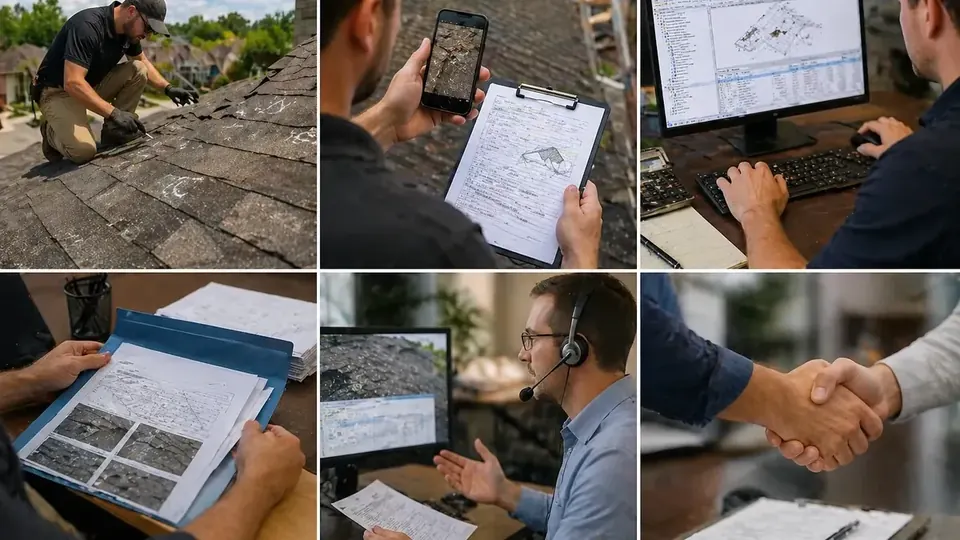
When a storm, fire or water loss hits a business, two problems arrive at once: a damaged building and an interrupted income stream. A commercial property insurance claim in Port Arthur has to address both, under policies that are longer and more technical than a homeowners form. We help business owners, multifamily owners, property managers and homeowners associations across Port Arthur, Beaumont and the rest of Southeast Texas organize the claim, document the physical damage and support the income portion with records the insurer can verify.
Commercial Properties We Work With
- Retail centers, restaurants, offices and medical buildings
- Warehouses, shops and pre-engineered metal buildings
- Businesses serving the refinery, petrochemical and port sectors
- Apartment complexes, duplex portfolios and other multifamily property
- Condominium and homeowners associations with master policies
- Churches, schools and other nonprofit buildings
Business Interruption: The Part of the Claim That Takes Longest
Business income coverage is designed to replace net income lost and continuing expenses while the property is being restored. In practice, it is often the most contested part of a commercial claim because it depends on projections, financial records and the length of the restoration period.
| Coverage | What it generally addresses | Key questions |
|---|---|---|
| Business income | Lost net income plus continuing normal expenses during the period of restoration | Waiting period, how long repairs should reasonably take, what sales would have been |
| Extra expense | Reasonable added costs to keep operating, such as temporary space or equipment rental | Whether the expense reduced the overall loss |
| Civil authority | Income lost when government orders block access because of nearby damage | Distance limits, duration and the cause of the order |
| Contingent business income | Losses caused by damage at a key supplier’s or customer’s property | Only if endorsed; which dependent properties qualify |
| Utility service interruption | Losses from an off-site power, water or communications failure | Only if endorsed; whether physical damage to utility property is required |
Port Arthur’s economy leans on refining, petrochemicals, shipping and the contractors and suppliers that support them. After a hurricane, a business can lose revenue because its own building was damaged, because a major customer shut down, or because roads and utilities were out. Those are three different coverage questions. Sorting them out early prevents a claim from being built on the wrong one.
Physical Damage on Commercial Buildings
Commercial roofs and structures in the Golden Triangle bring their own estimating issues.
- Low-slope roofs such as TPO, modified bitumen and built-up systems can trap water under the membrane after wind damage, and wet insulation may not be visible from above.
- Metal buildings show wind damage at panel seams, fasteners, trim and doors; hail can dent panels in ways that raise cosmetic-damage exclusions.
- Rooftop HVAC units, signage and lighting are often damaged and often overlooked.
- Interior build-out may belong to the tenant, the landlord or both depending on the lease.
Our pages on wind damage claims and roof damage claims go deeper into the building side.
Multifamily Properties
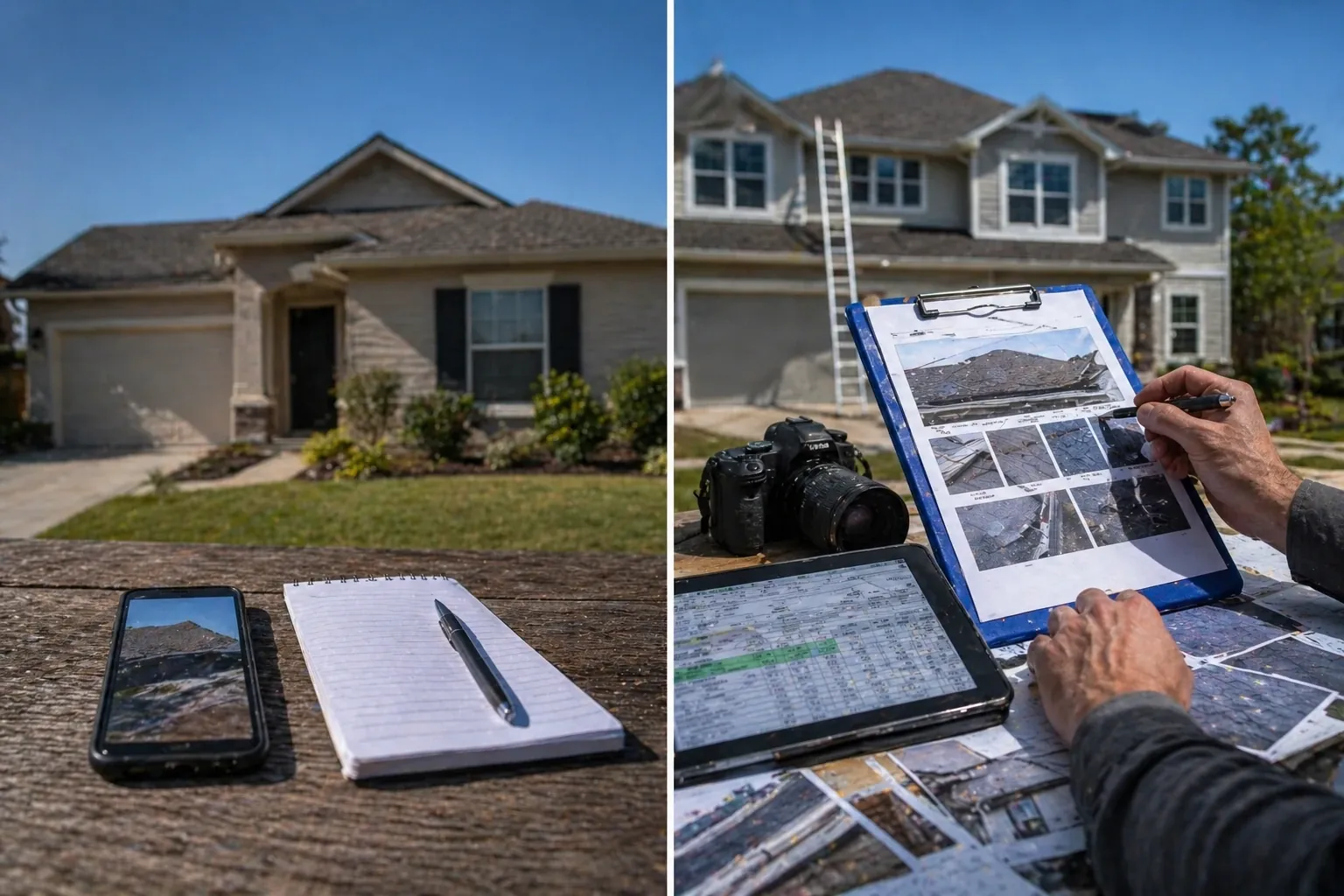
Apartment owners juggle building damage, tenant displacement and lost rents at the same time. Water that enters one unit can travel into the units below, and a single roof failure may affect dozens of tenants. Loss of rents coverage, where included, typically covers rental income lost while units are untenantable. Good records of occupancy and rent rolls before the loss make that portion of the claim much easier to support.
HOAs and Condominium Associations
Association claims raise a recurring question: who insures what? The governing documents and the master policy decide whether the association covers only the exterior shell, the structure up to bare walls, or original interior finishes as well. Unit owners then insure the rest. We work with boards and managers to document common-element damage across every building, track separate deductibles and keep the claim organized when many owners are asking questions at once.
Policy Provisions That Can Change the Outcome
Coinsurance
If the building limit is below the policy’s required percentage of value, the payment may be reduced. This is worth checking before a loss.
Percentage deductibles
Named-storm and wind/hail deductibles on commercial policies are often a percentage of the insured value and may apply per building. Use our hurricane deductible calculator to see how that math works.
Separate wind and flood coverage
As with homes, commercial property in Jefferson County may carry a separate TWIA or private wind policy, and flood is generally excluded from standard commercial forms. See our hurricane damage claims page for how those policies interact.
Documenting a Commercial Loss
Commercial insurers expect more paperwork than residential carriers, and the income portion of the claim rises or falls on records. Before and during the claim, it helps to gather:
- The complete policy, including the declarations, statement of values and every endorsement
- Building plans, prior roof reports and maintenance records, if available
- Photos and video of each building, roof, rooftop unit and interior space
- Profit and loss statements, tax returns and monthly sales for prior periods
- Payroll records and a list of expenses that continued during the shutdown
- Receipts for extra expenses, such as temporary space, generators or expedited shipping
- Leases, rent rolls and occupancy records for multifamily and tenant-occupied property
A Port Arthur Public Adjuster can help organize this information so the insurer receives a complete picture rather than a stream of partial submissions, which is a common reason commercial claims slow down. If your claim has stalled, see our page on delayed insurance claims.
How We Approach Commercial Claims
As a Port Arthur Public Adjuster, we start with the full policy, including every endorsement and the schedule of locations. We then inspect and document the buildings, prepare an Xactimate estimate, and work with your accountant on the business income figures. We present the claim to the insurer and keep communication in writing. We cannot guarantee a result, and coverage always depends on the policy and facts.
Fees are disclosed in a written contract before any work begins; Texas law caps public adjuster compensation at 10% of the insurance settlement. To talk through a commercial loss, request a Free Claim Review or call +1 (832) 503-5866.
Frequently Asked Questions
Does business interruption coverage pay if a refinery shutdown cuts my sales?
Standard business income coverage generally requires direct physical loss or damage to your own property from a covered peril. Some policies add contingent business income, civil authority or utility service coverage that may respond when damage happens elsewhere. Whether any of these apply depends on the exact endorsements and facts, so the policy needs a careful read.
What is a coinsurance penalty?
Many commercial policies require you to insure the building to a stated percentage of its value, such as 80% or 90%. If the limit is too low at the time of loss, the payment can be reduced proportionally. Checking the limit against a realistic replacement cost before a claim is the best protection.
Can you help an HOA or condo association with a master policy claim?
Yes. Association claims often involve multiple buildings, shared roofs and questions about where the master policy ends and unit owners’ coverage begins. We work with the board or property manager to document the common elements covered by the association’s policy.
How long does business income coverage last?
Typically for the period of restoration, which is the time reasonably needed to repair or replace the damaged property, subject to any waiting period and limits. Some policies add extended business income for a period after reopening. Check the declarations and the coverage form.
Is a TWIA policy available for commercial buildings?
TWIA writes windstorm and hail coverage for eligible commercial structures in the catastrophe area, which includes Jefferson County. Eligibility depends on factors including TDI windstorm inspection compliance. A commercial property may therefore have separate wind and all-other-perils policies.
What records should a business gather for a lost income claim?
Usually profit and loss statements, tax returns, monthly sales records, payroll records and documentation of extra expenses incurred to keep operating. Your accountant is often an important part of the process.
Can a public adjuster recommend a contractor to rebuild?
Texas public adjusters may not participate in the repair or reconstruction of a property on a claim they adjust. We can document the loss and work with the contractor you choose, but we do not do the repairs.