
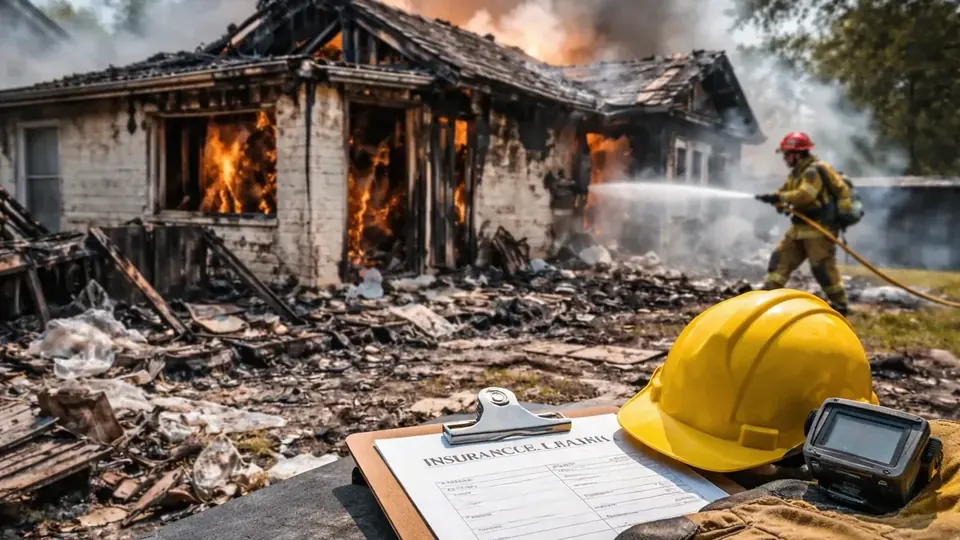
Port Arthur fire damage claims are different from storm claims in almost every way. There is no question about whether something happened, and fire is a covered peril on nearly every property policy. The hard part is the size of the claim. A kitchen fire can push smoke through every room, firefighting water can soak floors on the other side of the house, and the family may be living somewhere else for months. Each of those is a separate piece of the claim with its own limits and documentation requirements. This page explains how fire claims are usually structured and where they tend to fall short.
The Parts of a Fire Claim
| Claim component | Typical coverage | What you will need |
|---|---|---|
| Structure | Dwelling (Coverage A) or commercial building coverage | Detailed repair or rebuild estimate |
| Detached structures | Other structures (Coverage B) | Separate estimate for garages, sheds, fences |
| Contents | Personal property (Coverage C) or business personal property | Room-by-room inventory with ages and values |
| Living expenses | Additional living expense / loss of use (Coverage D) | Receipts for rent, hotel, extra mileage, and increased food costs |
| Debris removal | Often included within limits, sometimes additional | Demolition and haul-off invoices |
| Code upgrades | Ordinance or law coverage, if purchased | Permit requirements from the city |
| Lost business income | Business income and extra expense | Financial records, payroll, and recovery timeline |
Damage Beyond the Burned Area
The visible burn is often a small share of the loss. Fire claims in Port Arthur homes frequently include:
- Smoke and soot in rooms the fire never touched, inside wall cavities, attics, and HVAC ductwork. See our smoke damage claims page for more on this.
- Heat damage to wiring, plumbing, windows, and finishes near the fire.
- Water and chemical damage from firefighting, which can soak subfloors in pier-and-beam homes and lead to mold in humid weather.
- Structural damage to framing, trusses, and roof decking that may not be obvious until demolition.
- Odor that lingers in porous materials such as insulation, carpet pad, and upholstered furniture.
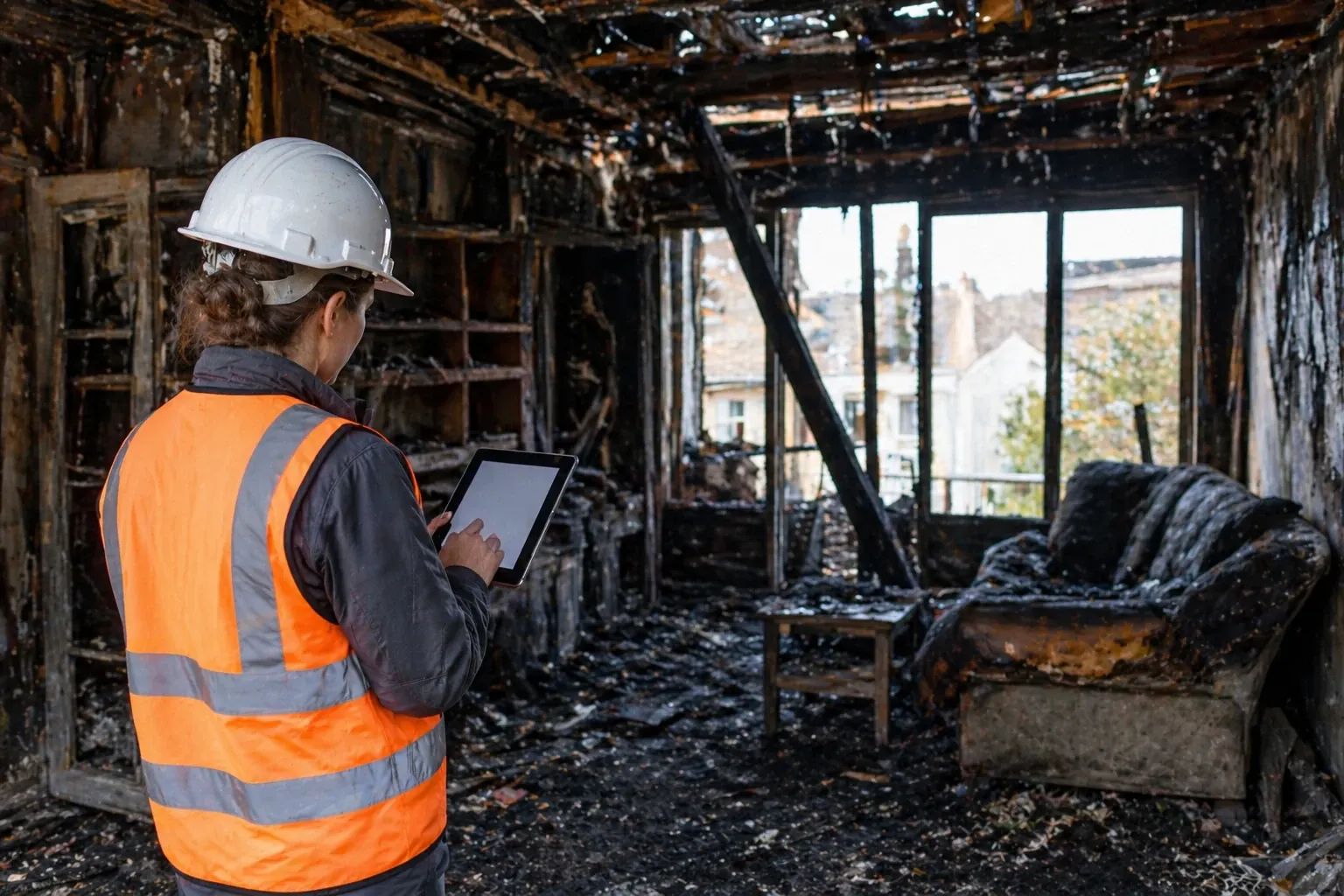
Rebuilding the Contents Inventory
For many families, the contents inventory is the hardest part of a fire claim. Insurers usually want each item listed with a description, quantity, age, and replacement cost. Some practical ways to rebuild it:
- Walk through each room in your memory, wall by wall, closet by closet
- Pull photos and videos from phones and social media that show rooms in the background
- Download order histories from online retailers and review bank and credit card statements
- Photograph damaged items before they are discarded, including labels and model numbers where possible
Under replacement cost policies, contents are often paid at actual cash value first, with depreciation released after items are replaced. Track what you replace and keep receipts.
Rebuilding After a Fire in Port Arthur
A significant fire usually means permits. The City of Port Arthur Building Inspections Division enforces the 2021 International Residential Code, International Building Code, International Plumbing Code, International Mechanical Code, and the 2020 National Electrical Code. Rewiring or replacing a burned section may require bringing that work up to current code. In Jefferson County, roof and structural repairs also need TDI windstorm inspection to keep TWIA eligibility. Whether your insurer pays for code upgrades depends on ordinance or law coverage. See our local building codes page.
Where Fire Claims Fall Short
- Cleaning allowed where replacement is needed, especially for smoke-saturated insulation and ductwork
- Scope limited to the room of origin, with adjacent rooms left out
- Contents values that rely on heavy depreciation or low-quality replacements
- Living expense coverage cut off before the home is actually ready
- Delays during the insurer’s cause-and-origin investigation
If the claim has slowed or the payment is too low, see our pages on delayed insurance claims and underpaid insurance claims. For disputes over the amount of loss, appraisal may be available under your policy.
Total Loss or Repair?
After a serious fire, one of the first big decisions is whether the building can be repaired or should be rebuilt. The insurer’s estimate may treat it as repairable while a contractor or engineer sees structural damage that makes rebuilding the more practical choice. Many Port Arthur homes are older pier-and-beam houses, and fire, heat, and firefighting water can all weaken framing and floor systems in ways that only show up during demolition. If the dwelling is a total loss, your policy limit, any extended replacement cost endorsement, debris removal, and ordinance or law coverage all become important. Ask for an engineer’s report when the condition of the structure is in question.
How a Port Arthur Public Adjuster Helps After a Fire
A public adjuster represents the policyholder, not the insurance company. After a fire, that may include documenting the structure with photos and 3D imaging such as Matterport, preparing a line-item Xactimate estimate, organizing the contents inventory, tracking living expenses, and communicating with the insurer’s adjuster and its consultants. For business owners, including those serving the refinery and port economy, we can help organize the building, inventory, and business income parts of a commercial property claim. Port Arthur Public Adjuster is a service of Rise Public Adjusting LLC, TDI license #3356839. We cannot guarantee results, and fees are disclosed in a written contract before any work begins; Texas law caps public adjuster compensation at 10% of the insurance settlement. If the insurer raises questions about the cause of the fire or requests an examination under oath, speak with a Texas attorney.
We serve Port Arthur, Jefferson County, and surrounding Southeast Texas communities, including Nederland, Groves, Port Neches, and Beaumont. To start, request a free claim review.
Frequently Asked Questions
What should I do in the first days after a house fire?
Make sure everyone is safe, get the fire department report number, notify your insurer, and secure the property with board-up and a tarp if needed. Ask the insurer about an advance for living expenses. Photograph everything before cleanup, and do not throw away damaged items until they have been documented.
Does my policy pay for a hotel or rental after a fire?
Most homeowners policies include additional living expense or loss of use coverage, which pays increased costs of living while the home is uninhabitable, up to the policy’s limit and time period. Keep receipts and compare them with your normal monthly costs.
Do I have to list every item that burned?
Insurers usually require a contents inventory with descriptions, quantities, ages, and values. It is a large job after a total loss. Photos, videos, bank and credit card statements, and online order histories can help rebuild the list room by room.
Is water damage from the fire department covered?
Generally, yes. Water and chemical damage from putting out a covered fire is usually treated as part of the fire loss. Make sure it is included in the scope, especially in rooms the fire never reached.
The insurer wants a recorded statement or examination under oath. Is that normal?
Insurers often investigate fires closely, and many policies require cooperation, including statements and documents. An examination under oath is a formal step. Consider speaking with a Texas attorney before one, since a public adjuster cannot give legal advice.
Can a public adjuster help after a commercial fire?
Yes. Commercial fire claims often include building, business personal property, and business income components. A public adjuster can help document each part. Fees are disclosed in a written contract before any work begins; Texas law caps public adjuster compensation at 10% of the insurance settlement.