Key takeaways
- Photograph and video everything before cleanup, then again during and after mitigation.
- Keep every receipt for tarps, pumps, dehumidifiers, hotel stays, and emergency services.
- Moisture readings and drying logs prove water damage you cannot see.
- A room-by-room contents inventory with ages and prices speeds up the personal property claim.
- NOAA and NWS weather records tie the damage to a specific storm date.
- Keep a written log of every call, email, and inspection with your insurer.
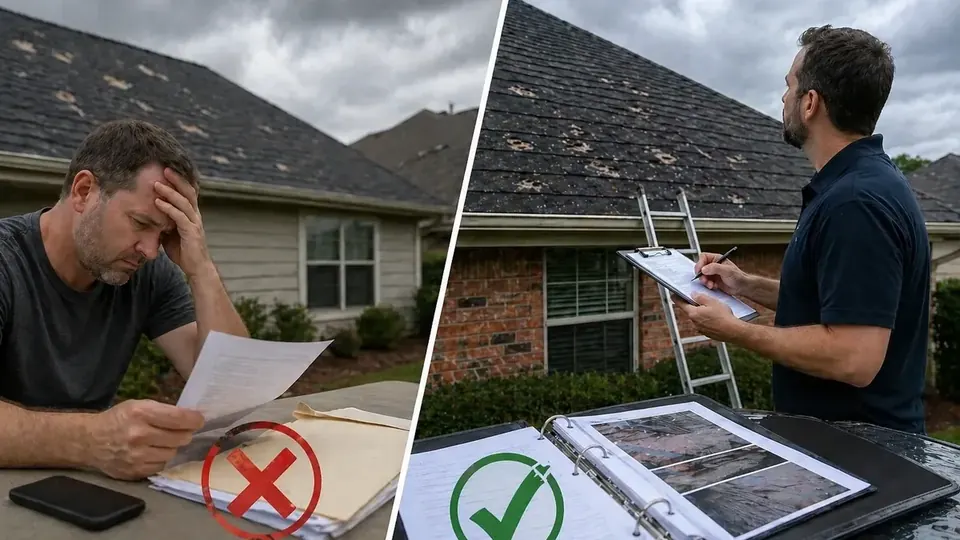
After a hurricane or severe thunderstorm in Port Arthur, the first instinct is to clean up. That instinct is understandable, but how you document storm damage in the first days often shapes the entire insurance claim. Adjusters work from evidence. If the damage is not photographed, measured, and recorded before it is torn out, it may be hard to prove later.
This guide gives Port Arthur, Groves, Nederland, Port Neches and Sabine Pass property owners a practical system for documenting storm damage, from the first photo to the final receipt. Print our claim documentation checklist to keep alongside it.
Do not climb onto a damaged roof, enter a building with structural damage, or walk through standing water that may be energized or contaminated. Photograph from the ground or a safe vantage point and let professionals handle the rest. Never run a generator indoors or in an attached garage.
The storm damage documentation checklist
| What to document | How | Why it matters |
|---|---|---|
| Exterior (roof, siding, windows, fences) | Wide shots of each side, then close-ups; video walk-around | Shows storm-created openings and wind direction |
| Interior rooms | Wide shot from each corner, then close-ups of ceilings, walls, floors | Shows scope and where water entered |
| Water lines | Photo with tape measure from floor | Separates flood from wind-driven rain |
| Moisture | Moisture meter readings, thermal images, drying logs | Proves hidden water damage |
| Mitigation | Invoices, equipment logs, before/after photos | Supports reimbursement and scope |
| Contents | Room-by-room inventory with photos, age, price | Required for personal property claims |
| Extra expenses | Hotel, meals, mileage receipts | Additional living expense or business income support |
| Weather data | NOAA/NWS records for your date and area | Ties damage to a specific storm |
| Communication | Log of calls, emails, letters, inspections | Tracks deadlines and commitments |
Step 1: Photos and video before you touch anything
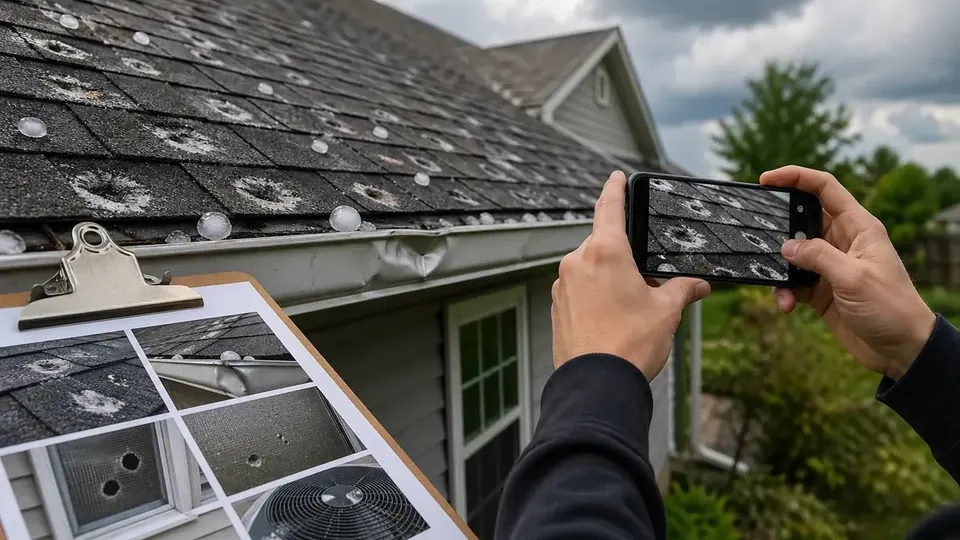
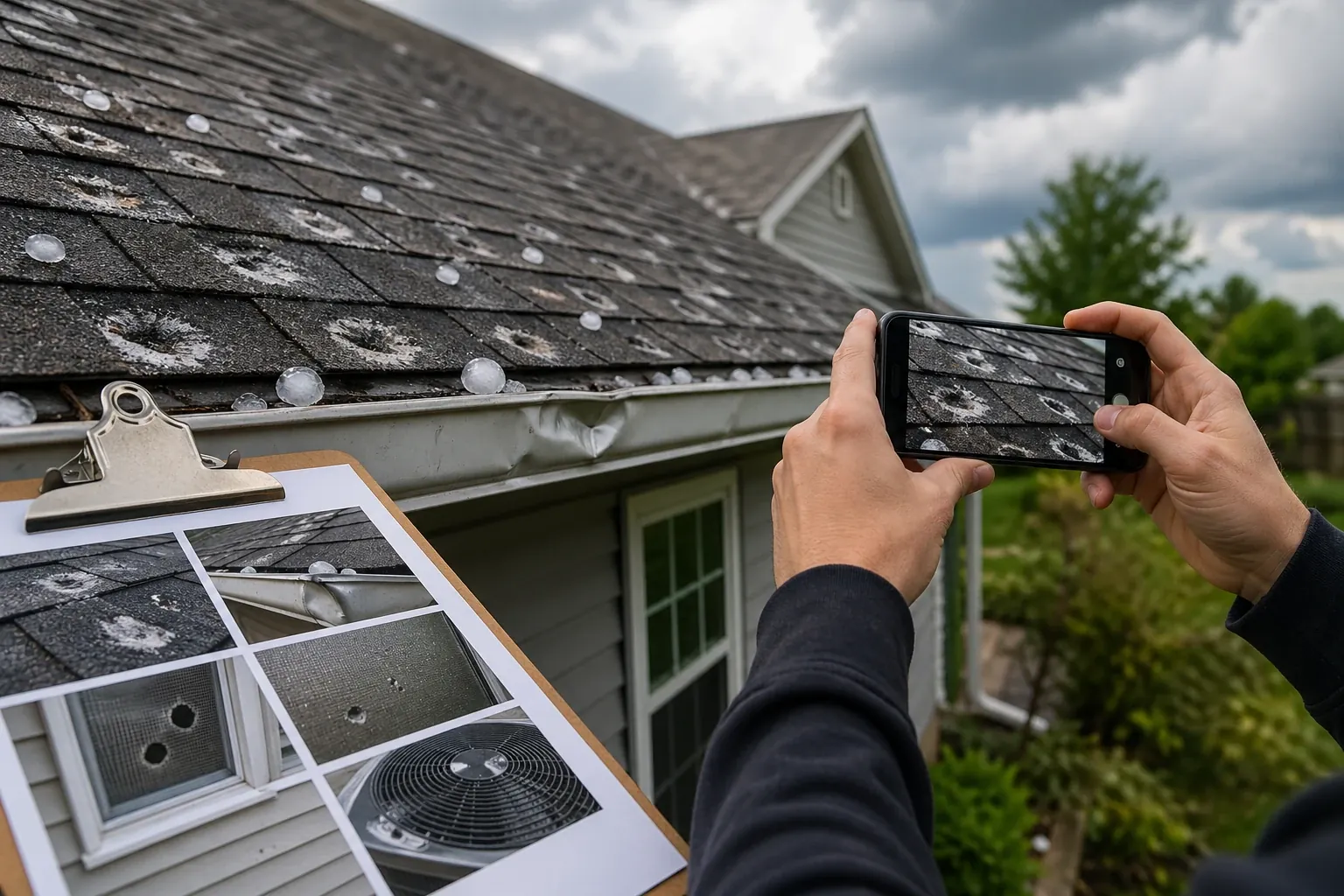
Start outside. Walk each side of the building and take a wide photo of every elevation, so an adjuster can see the whole wall or roof plane. Then move in for close-ups of each damaged area. Include something for scale, such as a tape measure or a coin.
Exterior photo list
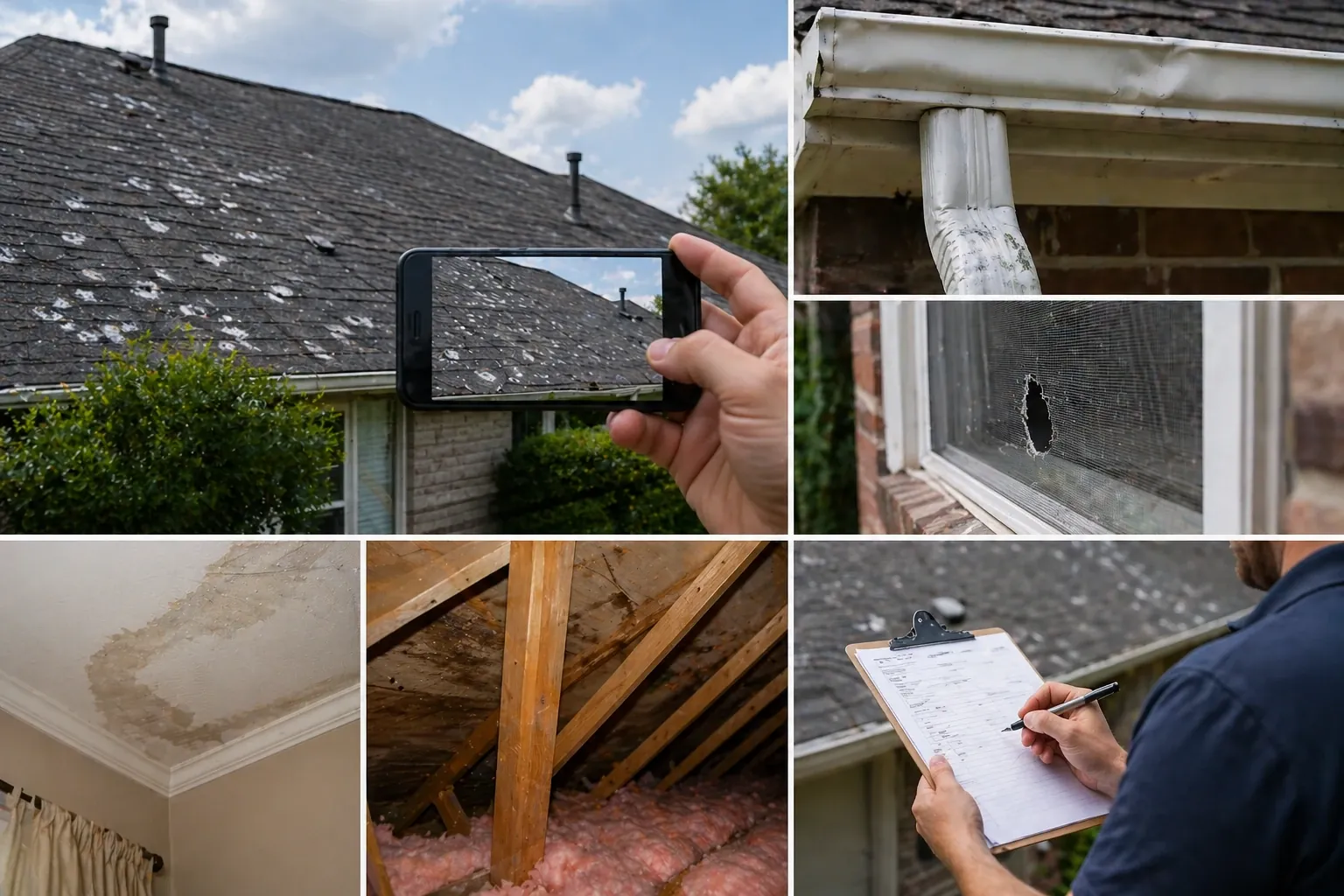
- Roof from the ground with zoom: missing or creased shingles, lifted ridge caps, exposed decking, bent metal panels, damaged vents and pipe boots.
- Gutters, downspouts, and fascia: dents, detachment, and hail spatter.
- Siding and brick veneer: holes, cracks, missing vinyl or fiber-cement pieces.
- Windows and doors: broken glass, damaged frames, water stains at sills.
- Fences, sheds, carports, and detached garages.
- Fallen trees and where they struck the structure.
- Water lines and debris lines on exterior walls and fences.
Interior photo list
- Each room from the doorway and from opposite corners.
- Ceilings: stains, sagging drywall, and light fixtures holding water.
- Walls: water lines, wet baseboards, bubbling paint.
- Floors: cupped wood, wet carpet, lifted laminate or vinyl plank.
- Cabinets and built-ins: swelling at the toe kick and base.
- Attic: wet insulation, daylight through decking, damaged trusses (only if safe).
- Crawlspace on pier-and-beam homes: wet insulation, standing water, damaged ductwork (only if safe).
Video is a good backup. Narrate as you go: the date, the room, what you see. Phone photos usually store the date and time in the file's metadata, which helps establish when damage was recorded. Back up the files to cloud storage the same day.
Step 2: Mitigation and the receipts that go with it
Most policies require you to take reasonable steps to protect the property from further damage. In Port Arthur's heat and humidity, water damage can turn into mold within days, so prompt drying matters for both the building and the claim.
- Tarp the roof or board openings. Photograph before and after.
- Extract water and start drying. If you hire a mitigation company, ask for their moisture readings, drying logs, and photo report.
- Remove wet materials as needed, such as carpet pad and the bottom of drywall, but photograph them first and keep samples when practical.
- Save every receipt: tarps, fasteners, pumps, fans, dehumidifiers, generator fuel, lumber, and labor.
- Track your own labor. Note hours spent on emergency work. Some policies may reimburse reasonable costs of protecting the property.
Hold off on permanent repairs, such as a full re-roof, until the insurer has had a reasonable chance to inspect, unless waiting would cause more damage. In Jefferson County, roof repairs and re-roofs also need to meet TDI windstorm inspection requirements to stay eligible for TWIA coverage, and city permits generally apply. Our local building codes page explains the basics.
Step 3: Moisture readings and hidden damage
Water travels. It wicks up drywall, soaks insulation inside walls, runs along subfloors, and pools under cabinets. Much of that damage is invisible. Moisture readings turn invisible damage into evidence.
Mitigation companies and adjusters commonly use pin and pinless moisture meters, and thermal imaging cameras to spot cool, wet areas. A moisture map that marks readings across walls and floors shows the extent of wet materials and how high water wicked. Drying logs show readings over several days as materials dry. Both support the scope of tear-out and replacement in an estimate.
Moisture data also helps on mixed-cause storms. Readings high on walls and in ceilings, above a flood line, can support wind-driven rain damage separately from rising water. See our article on wind vs. flood damage in Port Arthur for more on that split.
Step 4: The contents inventory
Personal property is often the most tedious part of a storm claim, and the part most likely to be underpaid because items are forgotten. Work room by room:
- Photograph each room as a whole, then each damaged item.
- List each item with a description, brand, model, approximate age, where it was bought, and the original price or a current replacement price.
- Photograph labels and serial numbers on appliances and electronics.
- Pull receipts, bank and credit card statements, and online order histories to support values.
- Do not forget closets, drawers, the garage, freezer contents, and outdoor items.
A spreadsheet works well. Separate columns for quantity, age, and replacement cost make it easier for the adjuster to review and for you to track what has been paid. If you have a TWIA policy, remember that personal property has its own deductible, separate from the dwelling.
Step 5: Weather records for your date of loss
Insurers frequently question whether damage came from a specific storm or from age and wear. Weather records help answer that. Useful sources include:
- NOAA's Storm Events Database, which lists reported wind, hail, tornado, flood, and surge events by county and date.
- National Weather Service Lake Charles, which covers Jefferson County and publishes event summaries after major storms.
- National Hurricane Center Tropical Cyclone Reports for named storms.
Our storm lookup tool pulls Jefferson County storm records by date, and our storm history page summarizes the major events. Save or print the records that match your date of loss and include them in your claim file.
Step 6: The communication log
A storm claim can involve several adjusters, inspectors, engineers, and contractors. Keep one log for everything:
- Claim number for each policy (homeowners, TWIA, flood).
- Date, time, name, and phone number for every call, plus a short summary.
- Copies of every email, letter, estimate, and report.
- Dates of inspections and who attended.
- Any request for documents and the date you sent them.
- Any promise or deadline given to you.
Follow up important phone calls with a short email confirming what was discussed. Texas prompt payment rules give insurers set time frames to acknowledge, investigate, and decide claims, and those clocks often run from when the insurer receives requested information. A clear log helps you see whether those time frames are being met. If you believe your claim is being delayed, our delayed insurance claims page explains common next steps.
Common documentation mistakes
- Cleaning up before photographing. Once it is in the dumpster, it is hard to prove.
- Only taking close-ups. Without wide shots, an adjuster cannot tell where a photo was taken.
- Forgetting the attic, crawlspace, and detached structures.
- Losing mitigation reports. Ask the mitigation company for the full file, not just the invoice.
- Relying on memory for phone calls. Write it down the same day.
- Waiting too long. Report the claim promptly. TWIA requires claims to be reported within one year of the date of damage, with possible extension for good cause, and other policies have their own notice requirements.
Extra steps for rental and commercial properties
Landlords and business owners in Port Arthur have a few more items to document. Many local businesses depend on the refineries, petrochemical plants, and port, and a storm that closes a building or cuts power can interrupt income for weeks.
- Business income records. Keep sales reports, profit and loss statements, and payroll records for the months before and after the storm. Business interruption coverage, if you have it, is usually calculated from these records.
- Extra expense. Track temporary locations, equipment rentals, overtime, and expedited shipping used to keep operating.
- Rental income. Landlords should keep leases, rent rolls, and records of units that became uninhabitable.
- Building systems. Photograph HVAC units, electrical panels, and low-slope or metal roof systems, which are common on commercial and industrial buildings and can hide water damage.
Our commercial property claims page explains how those claims are typically documented.
How a Port Arthur Public Adjuster documents a claim
A licensed public adjuster works for the policyholder. A typical documentation process includes a full property inspection, detailed photos, moisture readings and thermal imaging where useful, 3D imaging such as Matterport in some cases, weather data for the date of loss, and a line-by-line estimate, often in Xactimate. The goal is a claim file that shows what was damaged, why, and what it costs to repair.
If you have already documented your damage and the insurer's estimate seems low, a Port Arthur Public Adjuster can review it against your evidence. Fees are disclosed in a written contract before any work begins; Texas law caps public adjuster compensation at 10% of the insurance settlement. No outcome is guaranteed. For storm losses, see our storm damage claims service, or request a free claim review.
Frequently Asked Questions
Should I make repairs before the adjuster comes?
Make temporary repairs to prevent further damage, such as tarping a roof, boarding windows, and drying wet areas. Most policies require you to take reasonable steps to protect the property. Photograph the damage first, keep receipts, and generally wait on permanent repairs until the insurer has had a chance to inspect, unless waiting would cause more damage.
Can I throw away damaged items before the adjuster sees them?
Sometimes you have to, especially soaked carpet, padding, food, and items that create a health risk. Photograph and list them first, including brand, model, and serial numbers where possible. FloodSmart also recommends keeping samples of flood-damaged items like carpet, flooring, and curtains.
How many photos should I take?
More than you think. Take wide shots of every elevation and room to show context, then close-ups of each damaged item, with a tape measure or common object for scale. Video walk-throughs help too. Hundreds of photos is normal for a significant storm claim.
Why do weather records matter for my claim?
Insurers often ask whether damage came from a specific storm or from age and wear. NOAA and National Weather Service records can show damaging wind, hail, or flooding near your property on the date of loss, which supports your stated cause and date.
Do I need a moisture reading if the drywall looks dry?
It helps. Water can wick into wall cavities, insulation, subfloors, and cabinets without visible signs. In Southeast Texas humidity, hidden moisture can lead to mold quickly. Mitigation companies typically record moisture readings and drying logs, and those records support the scope of the claim.
Sources and further reading
This article is general information about property insurance claims in Texas, not legal advice, and not a promise of any coverage or outcome. Your policy language and the facts of your loss control your claim.