
Key takeaways
- Safety first. After Hurricane Laura in 2020, NOAA records three deaths in Port Arthur from carbon monoxide from a generator running in an enclosed area.
- A Port Arthur hurricane damage claim often means two or three claims: TWIA for wind, a flood policy for surge and rising water, and a homeowners policy for other covered losses.
- Photograph everything before cleanup, make temporary repairs, and keep every receipt. Mold can start quickly in Southeast Texas humidity.
- Hurricane and windstorm deductibles are often a percentage of your dwelling limit, so know the dollar amount before the adjuster arrives.
- Deadlines differ by policy: TWIA (generally one year to file), NFIP (proof of loss generally within 60 days), and private insurers under Texas Chapter 542, which can be extended 15 days after a declared catastrophe.
When a hurricane hits the upper Texas coast, Port Arthur homeowners face two jobs at once: getting the house safe and dry, and starting what can be a complicated insurance process. A Port Arthur hurricane damage claim is different from a typical claim in most of Texas because coverage is usually split across separate policies, adjusters arrive in waves from out of state, and the same storm can bring wind, wind-driven rain, storm surge, and days of rainfall flooding.
This guide walks through what to do, in order, from the first hours after the storm through the final payment.
Step 1: Stay safe after the storm
No claim is worth an injury. Before you inspect anything:
- Wait for local officials to say it is safe to return if you evacuated. Follow City of Port Arthur and Jefferson County guidance.
- Stay away from downed power lines and standing water that could be energized.
- Do not walk on a damaged roof. Photograph from the ground or let a professional inspect.
- Run generators outdoors only, well away from windows and doors. During Hurricane Laura, NOAA’s Storm Events Database records five indirect deaths in Jefferson County from carbon monoxide poisoning, including three in Port Arthur from a generator running in an enclosed area.
- Watch for structural damage, gas leaks, and wildlife displaced by floodwater.
Step 2: Document the damage before cleanup
Evidence is the foundation of every claim. Before you move or throw anything away:
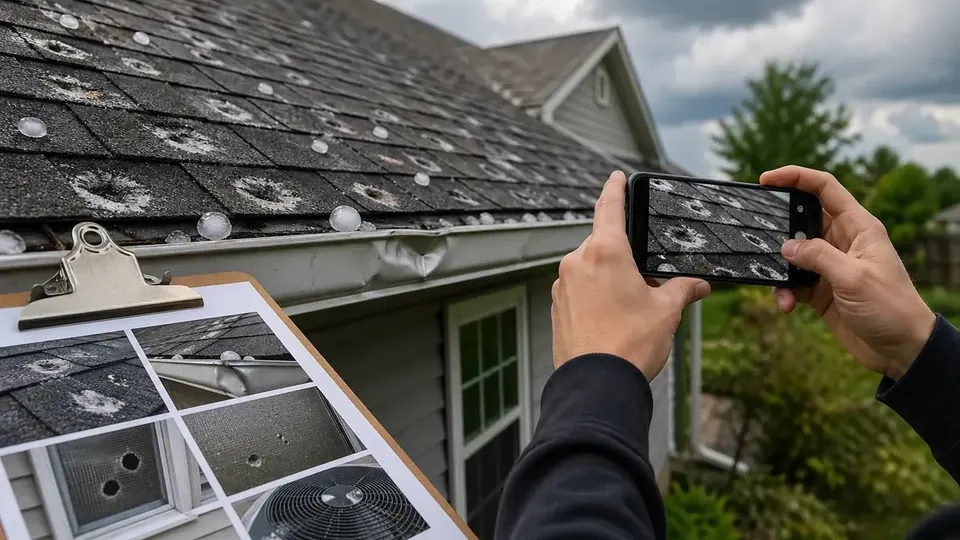
- Take wide shots of each side of the house, then close-ups of the roof, siding, windows, fences, and outbuildings.
- Walk every room with video, including the attic, closets, and garage.
- If water came in, photograph the waterline on walls and note whether it came from above (roof, windows) or rose from the ground. That distinction decides which policy responds.
- Photograph serial numbers and model tags on damaged appliances and electronics.
- Keep samples of damaged materials, such as a piece of carpet, a shingle, or a section of drywall, until the adjuster has seen them.
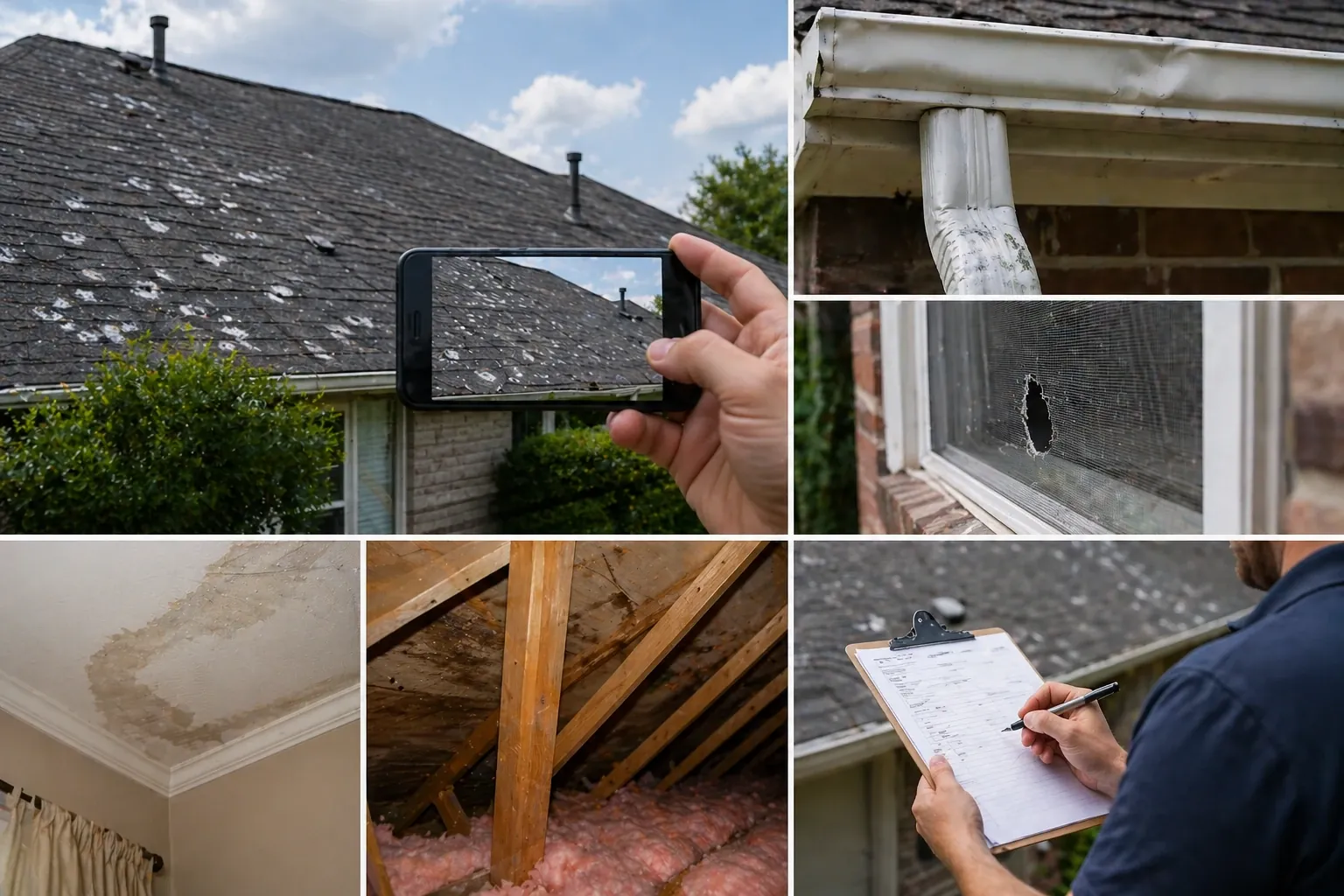
For a full list, see our claim documentation checklist and how to document storm damage in Port Arthur.
Step 3: Prevent further damage (mitigation)
Most policies require you to take reasonable steps to protect the property from further damage. Damage that gets worse because nothing was done may not be covered. Once you have photos:
- Tarp roof openings and board up broken windows and doors.
- Extract standing water and start drying with fans and dehumidifiers.
- Remove soaked carpet, pad, and drywall where needed, after photographing it.
- Move undamaged contents to a dry area.
- Keep every receipt and invoice, including for your own time and supplies if you do the work yourself.
Speed matters on the Gulf Coast. High heat and humidity mean mold can begin growing within days of a water loss. If drying cannot happen quickly, document why, such as power outages or contractor shortages. See our page on water damage claims.
Hold off on permanent repairs, like a full roof replacement, until the adjuster has inspected, unless the insurer agrees in writing.
Step 4: Figure out which policies apply
This is where Port Arthur differs from most of Texas. Jefferson County is a TWIA first-tier coastal county, so many homes carry a homeowners policy that excludes wind and hail, a separate TWIA windstorm policy, and a separate flood policy.
| Type of hurricane damage | Usually claimed under | Notes |
|---|---|---|
| Roof, siding, or windows damaged by wind | TWIA (or homeowners policy if it includes wind) | Windstorm or hurricane deductible applies |
| Rain entering through wind-damaged roof or windows | TWIA or wind-covering homeowners policy | Document the opening the wind created |
| Storm surge or rising floodwater | NFIP or private flood policy | Excluded by homeowners and TWIA policies |
| Tree falling on the house | Usually the wind policy | Debris removal limits may apply |
| Food spoilage, fire, or theft after the storm | Homeowners policy, depending on terms | Check sublimits and deductibles |
| Living elsewhere while repairs happen | Homeowners or TWIA additional living expense (if purchased) | NFIP generally does not cover living expenses |
Report the claim to each insurer that may be responsible, and keep claim numbers, adjuster names, and contact details for each in one place. When the same room has wind-driven rain from above and floodwater from below, each adjuster will try to assign damage to the other policy. Careful photos and moisture readings help sort that out. Read wind vs. flood damage in Port Arthur for more on this common dispute.
Flood claim timing
For NFIP policies, FEMA guidance says the signed proof of loss is generally due within 60 days of the loss, even if you disagree with the adjuster’s estimate, though FEMA sometimes extends that deadline after major disasters. Confirm the current deadline and submission address with your flood insurer. The NFIP claims checklist is a good starting point. Also remember that NFIP policies generally have a 30-day waiting period, so a policy bought as a storm approaches usually won’t cover it.
Step 5: Know your deductibles before the adjuster arrives
Many Texas policies carry a separate windstorm, named-storm, or hurricane deductible expressed as a percentage of Coverage A, such as 1%, 2%, or 5%. On a $250,000 dwelling limit, a 2% deductible is $5,000, and a 5% deductible is $12,500. Your flood policy has its own deductible. If you have two or three claims from one storm, you may face two or three deductibles.
Knowing the dollar figure helps you decide what to claim and set realistic expectations. Try our hurricane deductible calculator, and read Texas hurricane deductibles explained.
Step 6: Track additional living expenses
If the home is unlivable after a covered loss, additional living expense (ALE, sometimes called loss of use) coverage may pay the increased cost of living elsewhere, such as hotel or rental costs, extra mileage, laundry, and meals above your normal grocery bill. Keep every receipt, write down why the home could not be occupied, and ask the adjuster early how ALE will be handled. Whether you have ALE through TWIA depends on whether it was purchased on that policy. NFIP flood policies generally don’t include it.
Landlords and businesses should look at loss of rents and business income coverage. Port Arthur’s refinery, petrochemical, and port economy means many local businesses face shutdowns and supply interruptions after a storm. See commercial property claims.
Step 7: Prepare for catastrophe adjusters and delays
After a major hurricane, insurers bring in independent catastrophe adjusters from around the country. Expect:
- Waits for inspections, sometimes weeks, as adjusters work through large caseloads
- Files reassigned between adjusters, and repeated requests for the same documents
- Estimates written quickly that may miss hidden damage, local pricing, or code-required items
- Contractor shortages and price increases that make the estimate harder to repair against
Communicate in writing, keep a claim diary with dates and names, and send documents in a way you can prove, such as through the insurer’s portal or by email.

Texas claim deadlines after a hurricane
For most private insurers, Texas Insurance Code Chapter 542 generally requires the insurer to acknowledge the claim, begin investigating, and request information within 15 days after notice; to accept or reject within 15 business days after receiving everything it requested (or explain why it needs more time, up to 45 more days); and to pay within 5 business days after accepting. After a weather-related catastrophe or major natural disaster declared by the Commissioner of Insurance, those deadlines can be extended by 15 days. Surplus lines insurers are treated differently.
TWIA is not subject to Chapter 542. It follows its own timelines in Chapter 2210: claims generally must be filed within one year of the date of loss, and TWIA generally has 60 days after receiving the claim or requested information to accept or deny. See our TWIA windstorm claim guide.
Step 8: Review the estimate before you accept it
When the estimate arrives, compare it line by line with what you see in the house and with contractor bids. Common gaps after Southeast Texas hurricanes include:
- Roof repairs scoped where replacement is needed, or missing decking and flashing
- No allowance for TDI windstorm (WPI-8) requirements on roof work in Jefferson County
- Code-required items under ordinance or law coverage, such as items required by Port Arthur’s 2021 International Residential Code
- Missing interior damage from wind-driven rain, including wet insulation and drywall
- Heavy depreciation, especially on older roofs
- Contents left off or undervalued
Under a replacement cost policy, the insurer typically pays actual cash value first and releases recoverable depreciation after repairs are done, within a deadline in the policy. Track that deadline. If you find missed items, submit a supplement with photos and estimates.
Step 9: Plan repairs around permits and windstorm inspections
Roof replacements and structural repairs in Port Arthur generally need a city permit, and in Jefferson County, roof work and other repairs must meet TDI windstorm requirements and receive a WPI-8 Certificate of Compliance for the home to remain eligible for TWIA coverage. Confirm requirements with the City of Port Arthur Building Inspections Division and use contractors familiar with windstorm inspections. Our local building codes page has details.
When to get help
Many hurricane claims are handled directly with the insurers. Others, especially those with multiple policies, large structural damage, wind-versus-flood disputes, or estimates far below repair bids, can benefit from professional help. A Port Arthur Public Adjuster can document the loss, prepare a detailed Xactimate estimate, coordinate the separate claims, and present them to each insurer. Fees are disclosed in a written contract before any work begins; Texas law caps public adjuster compensation at 10% of the insurance settlement. Legal questions, such as bad faith or lawsuit deadlines, belong with a Texas attorney.
Whether the next storm is a Laura, a Delta, or something smaller, the steps are the same: stay safe, document everything, protect the property, report to every insurer, and read every estimate before you accept it. Learn more on our hurricane damage claims page, or ask a Port Arthur Public Adjuster for a free claim review.
Frequently Asked Questions
Who do I call first after hurricane damage in Port Arthur?
Make sure everyone is safe first. Then report the claim to every insurer that may be involved. In Port Arthur that often means TWIA for wind and hail, your flood insurer for rising water or storm surge, and your homeowners insurer for other covered damage. Your agent can confirm which policies you have.
Does homeowners insurance cover hurricane flooding?
Standard homeowners policies generally exclude flood, including storm surge and rising water. Flood coverage comes from a National Flood Insurance Program policy or a private flood policy. Rain that enters through wind-created openings in the roof or walls is treated differently and may be covered as part of the wind claim, depending on the policy.
Will my insurance pay for a hotel after a hurricane?
If the home is unlivable because of a covered loss, many homeowners policies include additional living expense (loss of use) coverage, and TWIA policies may include it if it was purchased. NFIP flood policies generally do not cover living expenses. Keep every receipt and check the limits on your declarations page.
How long does the insurer have to respond after a hurricane?
For most private insurers, Texas Insurance Code Chapter 542 sets deadlines to acknowledge, investigate, decide, and pay a claim, and those deadlines can be extended by 15 days after a weather-related catastrophe declared by the Commissioner of Insurance. TWIA follows its own timelines under Chapter 2210, generally 60 days to accept or deny after receiving the claim or requested information. Flood claims follow NFIP rules.
What is a hurricane deductible?
Many Texas policies apply a separate windstorm, named-storm, or hurricane deductible that is a percentage of the dwelling (Coverage A) limit, such as 1%, 2%, or 5%. On a $200,000 dwelling limit, a 2% deductible is $4,000. Flood policies have their own deductibles. Check your declarations pages.
Should I wait for the adjuster before making repairs?
No for emergency repairs, yes for permanent ones. Photograph the damage, then tarp the roof, board openings, and dry the house to prevent further damage, keeping receipts. Hold off on permanent repairs, such as a roof replacement, until the adjuster has inspected, unless your insurer agrees otherwise in writing.
Sources and further reading
- NOAA NCEI Storm Events Database — Hurricane Laura, Jefferson County (August 2020)
- Texas Insurance Code Chapter 542 — Prompt Payment of Claims
- Texas Windstorm Insurance Association — Claims
- NFIP (FloodSmart) — Claims checklist for policyholders
- National Weather Service — Hurricane preparedness and safety
This article is general information about property insurance claims in Texas, not legal advice, and not a promise of any coverage or outcome. Your policy language and the facts of your loss control your claim.